
A call to grassroots action and shared responsibility, empowering everyday citizens to build a just, sustainable future without relying solely on traditional leaders.
Please watch ON youTube. Like and Subscribe. Thanks so much for watching! 💚
A call to grassroots action and shared responsibility, empowering everyday citizens to build a just, sustainable future without relying solely on traditional leaders.
Please watch ON youTube. Like and Subscribe. Thanks so much for watching! 💚
Cabbage Palmetto explores art’s power to shape ideas and influence culture, in this empathic reading. Please watch on YouTube (see below) and if you enjoy what you’ve seen, give me a 👍🏻 and subscribe to the channel. Thanks so much. 💚
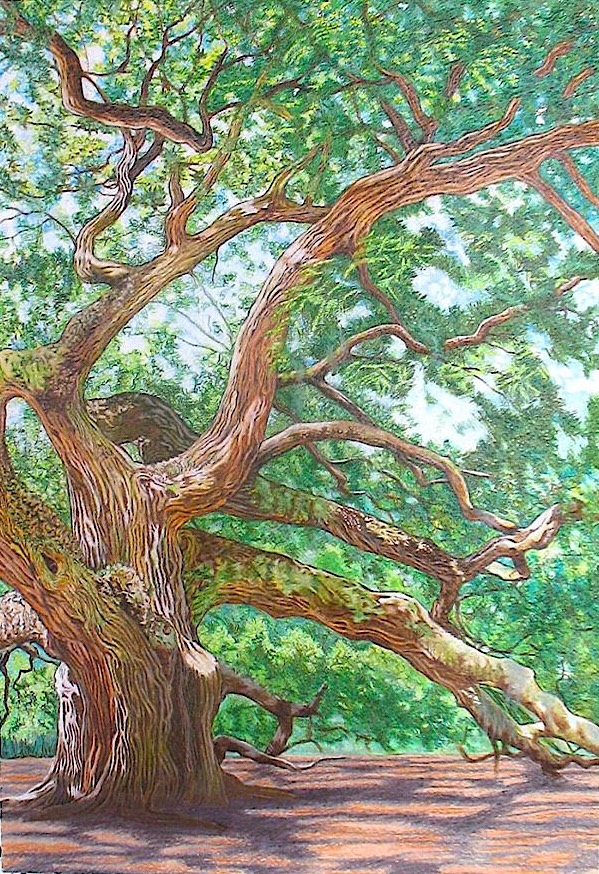
There was a belief that was common to both the tribes of the Celts and of the American Indians. The details are different, but the idea was similar—that a Sacred, colossal tree united the realms of the Earth. The roots were planted in the physical; then, life evolved on its way up the trunk, culminating in the spiritual, which resided in the branches.
The top of the tree was an over-world, where the Sky People dwelt. They were, variously, the star beings seen in the constellations, the godlike progenitors of human kind, or spirit forms who created and then dropped or threw down The People.
Animals seemed to exist already, and could talk and reason and bargain with the Sky People. Sometimes, a mischievous animal would bring a gift—fire or the wheel, or knowledge of agriculture—which would help humans survive and thrive. Because the Sky People were jealous of their exclusive domain, they would become angry with the offending animal, who would be punished by being marked with some physical characteristic—distinctive coloring, for instance—because of this intervention. The Magpie, Coyote, Rabbit, Spider and Raccoon are examples of this.
There was a middle realm in which humans lived, the physical world of day and work. What happened there was caused by, or a reflection of, the events and conditions of the other two worlds.
Last, or rather first, there was a lower region of sleep and dreams and ancestors. This place was seen as the source of life, and the place where all life returned when physical existence was over, to be reabsorbed by Death. The roots of the tree were in the lower region, recognizing that much of the motivation in our everyday lives and thought was unknowable in the light of day, but more powerful and basic than the wakeful mind.
The cultures holding these traditional beliefs lived in or near the great primeval forests, which were thousands of years old when humans first became unified into cultural groups, and the trees would have been seen as not only alive, but as conscious and aware.
In Europe, and the greater part of North America, these mighty forests blanketed thousands of square miles, only broken up by bodies of water, the highest mountains, or regions of steppe. Many of these old trees had massive trunks, or lifted so high into the air that their tops could not be seen from the ground, so it was a completely plausible idea that trees could touch the heavens. There were no tall buildings, and no air travel, and the largest of the great trees would not have been cut down without fear of terrible retribution from the spirit of the land.
The reverent beliefs of those times appear to be long past, and we, as a species, seem to inhale the forests, describing them as “resources;” buying and selling, in cavalier fashion, what took decades, perhaps hundreds, even thousands of years to become part of Nature’s magnificent design.
I’ve given up believing that angry Gods, Goddesses or invisible spirits would avenge Mother Earth for our abuses of the forests, but I do believe that the changes in planetary temperatures, beginning at the dawn of the Industrial Revolution, have reached a point in which climatic backlash is happening in front of our eyes. If we continue much longer to ignore or deny the obvious, the lands retribution for the demise of the great forests will be closer than we think.
© 2025 Laura J Merrill
Velvet Mesquite gives us some insight into our own issues. Do me a favor and click on the thing at the bottom of the screen that reads “Watch on YouTube.” The more views and likes I get, the more likely sites’ algorithms will bring my video up for others to see. Thanks!
An uplifting reveal from Quaking aspen.
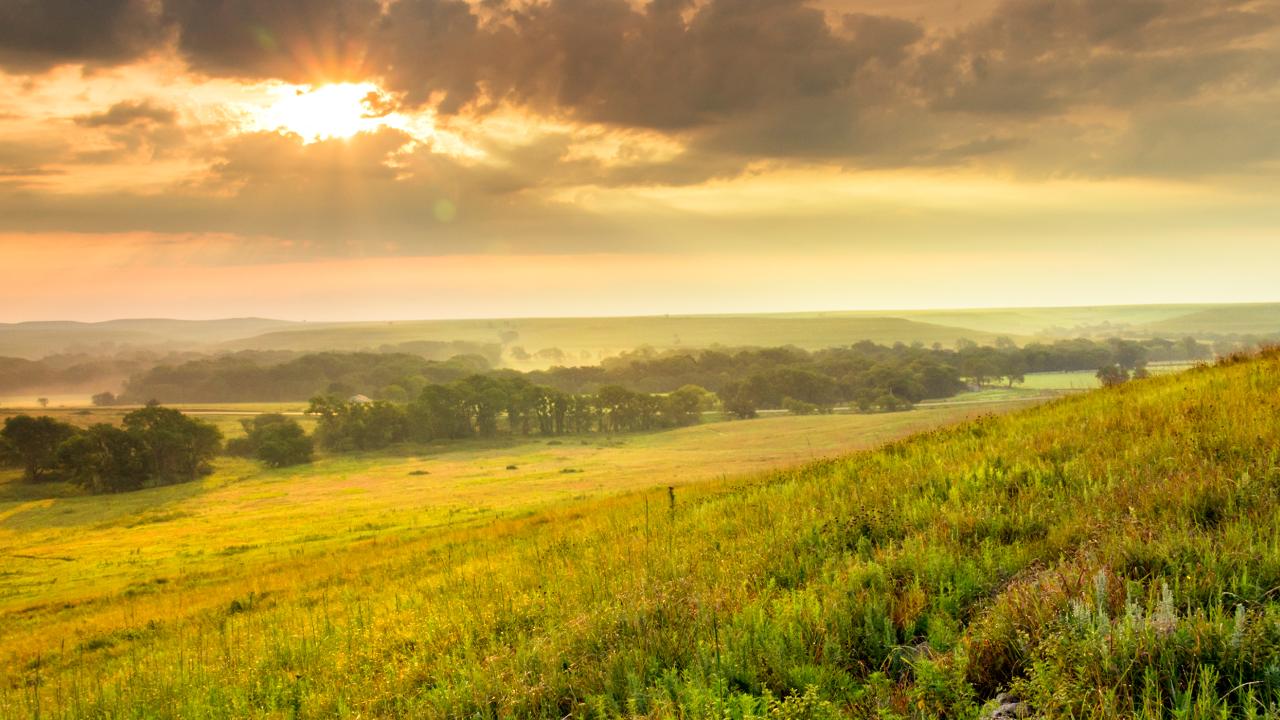
In 1887, the western portion of the Great Plains was described as “an arid and repulsive desert . . . a region of desolation and silence . . . [with] common characteristics of barrenness, inhospitality, and misery,” in A Study in Scarlet, Arthur Conan Doyle’s first Sherlock Holmes adventure. Peoples of the British Isles, and points east had been, for thousands of years, committed to removing as much of “wild” nature as they could. Great cities, housing millions of people, were already common throughout “the Old World,” so to even contemplate migrating to an area where the only inhabitants were tribes of American Indians, who were never excessive in number, and a few rough and hardy trappers, miners and pioneers, was nearly inconceivable.
Having lived in Utah for several years, I can see why the British, and other Europeans, would consider a place so different from their homelands as inhospitable. However, Doyle’s description was not specifically about Utah, and included a large section of the Short-grass Prairie.
“Lush” is in the eye of the beholder. Sub-surface life on the plains is more extensive than what is above ground; indeed it has been referred to as “the poor person’s tropical rainforest,” because of the abundant and varied forms of life contained per cubic yard.
The majority of us may not be particularly into the world of creepy-crawlies, and probably figure, “Oh, what’s the difference if I kill all these little things every time I take a step because there’s so many of them, and I can’t see them anyway.” Nevertheless, it’s worth remembering that in the greater scheme of things, humans are comparatively small, and can be wiped out just as easily.
How do we know there isn’t a being so immense, compared to us, that we’re unable to take in its entire form all at once, and who, should it take a “step,” would wipe out millions of us at a crack? And while that idea takes us to a “what if?” place more appropriate to science fiction, certain viruses have the capacity to do the job very well, as we have recently come to realize.
While we tend to loathe and fear these microscopic creatures, they, much more than we, hold the planet together—literally. They are what allow plants and animals to absorb nutrients. Without them, “higher” life forms, which have evolved to make use of their abilities, would not survive, and that includes us. Without all those microbes, bacteria, yeasts, and others, Earth would still be a big rock with a molten core, slowly cooling.
But the subject was grass. And the evolution of grasses, it appears to me, accounts for the great explosion of current life forms. Countless animals, of all sizes, eat them, and are eaten in turn, returning in death to the soil and, as a matter of fact, eventually as soil. So the little, humble things such as algae, bacteria, viruses, fungi, ants, bees, birds, and yes, grass, are important—actually, vital. Without any of them, life would all just fade away.
© Laura J Merrill 2014
Watch this on YouTube (see bottom left ⬇️) and please 👍🏻 subscribe and share with people that love nature and trees.

I’ve looked at several articles, more or less recent, about the future of Wind turbines, as a part of the government’s plans for investing in green energy. Rather than recite the articles themselves, I’m just going to give you my general impression and opinion. Lots of opinion. You may comment, if you like.
There has been a lot of effort into establishing wind power as a more significant portion of energy sources in the US. Biden has gotten the military to agree to a couple of big offshore development areas on the West Coast (you can bet there will be a lot of protest about that.) So, now there is a lot of research and development on remote, floating ocean wind turbines, which would be on huge platforms, as opposed to the ones that are near shore, imbedded in the rock off the coasts.
These things cost a ton of money to make, transport and install, I might add, and only last 20-25 years. Sure, they give us green energy, but their production involves a lot of materials that are anything but green. They are made of all kinds of the normal stuff—steel, plastic, tons of concrete, etc., etc.—and something called rare earth elements (REE), that are part of the magnets that operate the turbines themselves. There’s lots of REE in the earth, but it’s mixed with a lot of other things, so it’s difficult, messy and polluting to mine and process the ore, also, the mining and processing uses vast amounts of water, which is becoming a rarer commodity as time goes on (that’s another issue, however).
We do have one large mine, the Mountain Pass Mine, southwest of Las Vegas, that is scheduled to start processing (rather than sending it to China to be processed) in 2022. It was owned by Molycorp, Inc., which went bankrupt; it’s since been sold to MP Materials. Anyway, you’re welcome to look up information on all that, if you like.
So, anyway, these REE are expensive, hard to come by, and cause a lot of global tension. I mean, why do you think the U.K., Russia, the United States, and now China, have worked so hard to get into Afghanistan? Because they have LOTS of REE in all those mountains, as a largely untapped resource. It would be a huge coup for China to acquire REE in quantity. But with the way things are in Afghanistan and the way the Chinese like to run things, I think it’s going to be very interesting to watch what happens. Good luck to them, I say, and “watch this space,” as the saying goes.
However, I found that there is at least one company, Greenspur Renewables, that is working on turbines that do the job without the use of REE. I know they’re currently operating, but don’t know a lot more than that, so I don’t want to say, “Hey, go out and invest in these guys!”
So this has not been an article that is particularly pro wind energy, but I believe that there will be those who will invent what is needed to move us forward without creating even more pollution. It will take the market to drive it, tho, which is why I think the Afghanistan/China situation is so interesting.
Dragonfruit

Also called “pitahaya” by the Maya, the Dragon fruit is an often-cultivated species of fast-growing, vine-like, tropical cactus. Quite sensitive to temperatures below freezing, it is only grown within a global range that will also not exceed temperatures greater than 100 degrees.
Originating in Central America, this perennial can attach itself to branches, rocks, walls, houses or any other surface upon which it can gain a foothold. It is primarily grown as a fruit crop, but is also considered an ornamental, although it can spread out of control. (from Volume 4-upcoming someday 🙂
My Blog – 10/2/2021

I’ve been watching the news—like, a LOT— for a few years now, but I just can’t take this shrill, incessant harping on whatever’s going on in Congress. I mean, for God’s sake, just leave them to it! Sure, people should call their Congressman and Senators to let them know how we feel—politely, I might add, with no profanity or threats—but the press (and I LOVE the Free Press) needs to take a chill pill. There are LOTS of other things going on in the world, that just might be interesting and informative, and things that might actually be useful to our lives.
I’m not the kind of person who buries my head in the sand about what’s happening to the planet or even what’s happening with us “just folks” in America, but I think the press does not help the situation by dwelling on the negative, almost exclusively, except for the odd human interest story.
I understand that we pay more attention to what’s negative, but it’s a loop that feeds itself, and it doesn’t make for happy, healthy people. Angry people are not healthy.
So turn it off for a while. Watch the football game, or “Dancing with the Stars” or a rerun of the X-Files. Or go out and play catch with the kids.

Diego, the Tortoise Whose High Sex Drive Helped Save His Species, Retires
With the future secured, he’s finally going home. Good job, Diego.
By Aimee Ortiz
Jan. 12, 2020
A member of the giant tortoise species indigenous to Española Island in the Galápagos in Ecuador, Diego was one of 15 tortoises in a captive breeding program at the Fausto Llerena Tortoise Center on the island of Santa Cruz.
Among the males, Diego displayed an exceptional sex drive, so much so, he’s credited with helping save his species from extinction. Approximately 40 percent of the 2,000 tortoises repatriated to Española Island are estimated to be Diego’s descendants, officials said.
Now, more than 100 years old, he is retiring, since the Galápagos National Park announced the end of the breeding program, saying an evaluation showed it had met its conservation goals. (Maybe he doesn’t want to quit now!!)
Begun in 1965, the program on Pinzón Island started with the last 2 males and 12 females, plus Diego, a 30-year old male from the San Diego Zoo who is believed to have been taken from Española Island in the 1930s.
For many years, feral goats overran the island, competing for food and destroying the habitat. Conservationists have worked to restore the island’s habitat, including the growth of cacti, which are a main source of food for the tortoises.
There are more details on the breeding program here. And here.
************************************************

Photo: Laurent Gillieron. AP
Climate Crisis Will Reshape Finance,
Andrew Ross Sorkin,
January 14, 2020
Laurence D. Fink, the founder and chief executive of BlackRock, announced Tuesday that his firm would make investment decisions with environmental sustainability as a core goal.
BlackRock is the world’s largest asset manager with nearly $7 trillion in investments, and this move will fundamentally shift its investing policy — and could reshape how corporate America does business and put pressure on other large money managers to follow suit.
Mr. Fink’s annual letter to the chief executives of the world’s largest companies is closely watched, and in the 2020 edition he said BlackRock would begin to exit certain investments that “present a high sustainability-related risk,” such as those in coal producers. His intent is to encourage every company, not just energy firms, to rethink their carbon footprints.
“Awareness is rapidly changing, and I believe we are on the edge of a fundamental reshaping of finance,” Mr. Fink wrote in the letter, which was obtained by The New York Times. “The evidence on climate risk is compelling investors to reassess core assumptions about modern finance.”
In recent years, many companies and investors have committed to focusing on the environmental impact of business, but none of the largest investors in the country have been willing to make it a central component of their investment strategy.
In that context, Mr. Fink’s move is a watershed — one that could spur a national conversation among financiers and policymakers. However, it’s also possible that some of the most ardent climate activists will see it as falling short.
More details here.
********************************************

Photo: Tyler Varsell
Climate Fwd – One Thing We Can Do: Fix Recycling
by Eduardo Garcia,
January 15, 2020
For years, we relied heavily on recycling operations in China to take our waste. But that came to an end in 2018, when Beijing barred the import of recycling materials. The result is a waste crisis that has caused at least dozens of municipalities to cancel curbside recycling programs, with many more implementing partial cuts. Huge amounts of recyclables are now going to landfills.
Experts say that we would need to implement changes across the board. Legislators may need to pass laws requiring manufacturers to use more recyclable materials, companies would need to build much-needed recycling infrastructure and people would need to recycle properly.
Cities can’t do all that. But they can play an important role.
For a possible model, consider San Francisco, which runs one of the most successful waste-management programs in the United States. Through recycling and composting, the city manages to keep around 80 percent of its waste out of landfills.
San Francisco’s program has been years in the making. In 2000, it introduced the “fantastic three” citywide curbside collection program with separate, color-coded bins for recyclables, compost and trash. In 2009, it passed a law requiring residents and businesses to separate their waste.
Other policies include bans on hard-to-recycle items including single-use plastic bags and polystyrene packaging and an ordinance requiring food vendors to use compostable or recyclable food containers.
San Francisco’s system is built on a highly unusual partnership with a single waste company. That company, Recology, has had a monopoly on handling San Francisco’s waste for almost 90 years. That no-bid, no-franchise-fee concession has come under harsh criticism over the years.
More here.
*************************************************
Also, in “Spotlight On” –
 Glistening Inkcap
This is a common edible fungus found all over the world. It grows in dense clusters on rotting hardwood and disturbed ground sites. Under humid conditions, it can also grow indoors on rotting wood. In one instance it was discovered about four hundred feet underground in an abandoned coal mine, growing on wooden gangways and props used to support the roof. The Glistening inkcap can be highly productive, with several successive crops appearing during one fruiting season.
The entire cap surface is covered with reflective cells that look like flakes of mica, which give this mushroom its name.
It is edible, and is enjoyed in omelets and sauces. Nutritionally, it contains a very high concentration of potassium, but also accumulates heavy metals from exposure, so it should not be collected from roadsides and other areas that may be exposed to pollutants.
The scientific community has found the Coprinellus micaeus of interest since 1601, when it was the subject of a monograph by Carolus Clusius in The History of Rare Plants. As this mushroom is plentiful and easily grown in laboratories, it has often been the subject in studies of cells and the processes of spore production.
Bioactive compounds have been isolated from Coprinellus micaeus. One was found to inhibit the enzyme that aids cancer cells to resist chemotherapy, and one has been shown to have some modest potential as an antioxidant. (From Volume 1 of Secret Voices, Coastal Redwood Companions)
**********************************
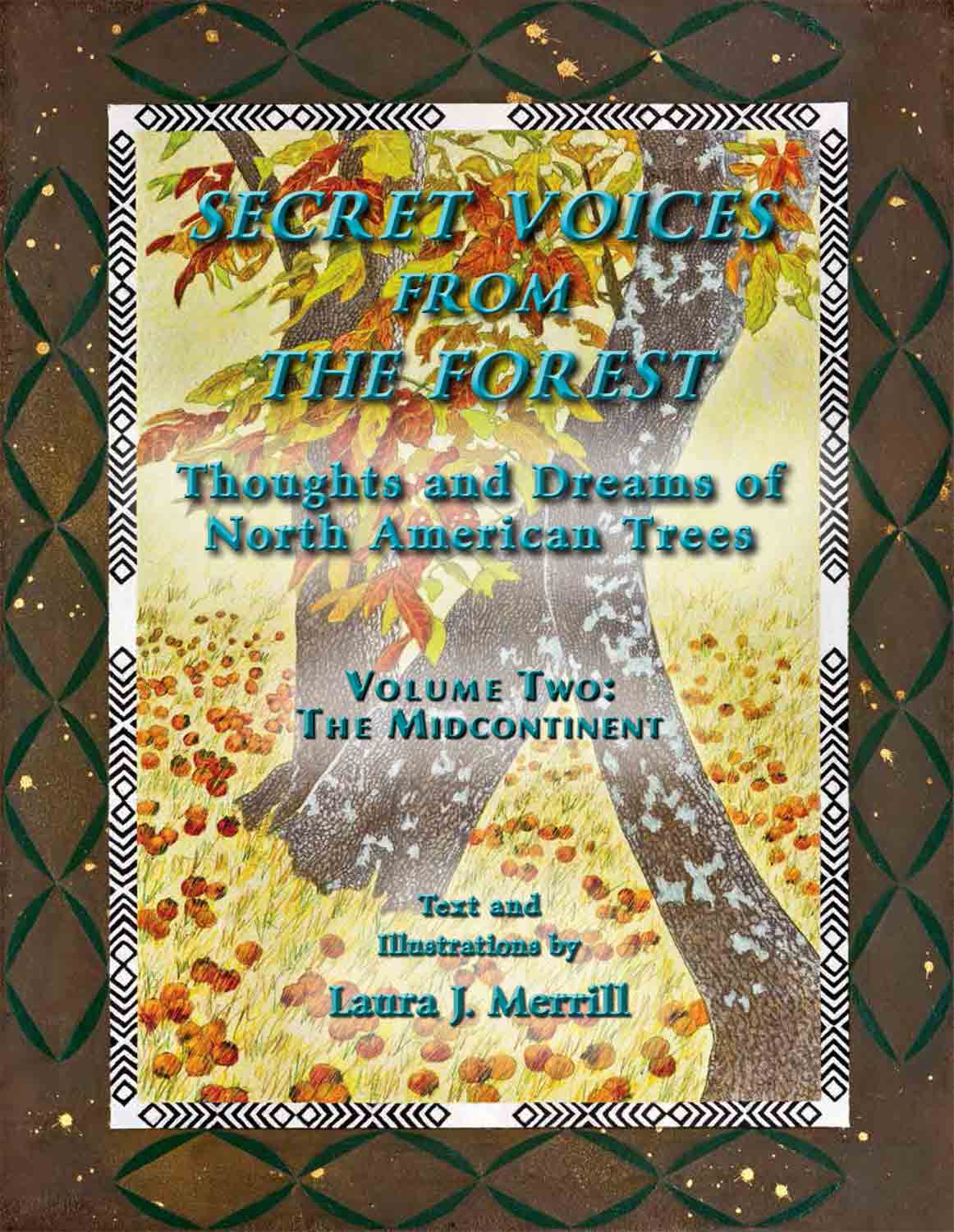
And, don’t forget my books, Secret Voices from the Forest – Thoughts and Dreams of North American Trees, are on sale on Amazon.com. p.s. There are some weird people offering them for sale, sometimes for hundreds of dollars! Don’t be fooled. The list prices are $28.95 for Vols. 1 & 2, and $32.95 for Vol. 3.


See ya later, alligator.

Reducing Fire, and Cutting Carbon Emissions, the Aboriginal Way
As blazes rage in southern Australia, Indigenous fire-prevention techniques that have sharply cut destructive bushfires in the north are drawing new attention.
Thomas Fuller, NYT, Jan. 16, 2020
Photo by Matthew Abbott
Traditional Aboriginal practices of burning, which reduce the undergrowth that can fuel bigger blazes, are attracting new attention as Australia endures disaster and confronts a fiery future.
Over the past decade, fire-prevention programs, mainly on Aboriginal lands in northern Australia, have cut destructive wildfires in half. These programs, first given government licenses in 2013, now cover an area three times the size of Portugal. Even as towns in the south burned in recent months and smoke haze blanketed Sydney and Melbourne, wildfires in northern Australia were much less severe.
These efforts draw on ancient ways, but have a thoroughly modern benefit: Organizations that practice defensive burning have earned $80 million under the country’s cap-and-trade system as they have reduced greenhouse-gas emissions from wildfires in the north by 40 percent.
They are also generating important scientific data, and are held up as a model that could be adapted to save lives and homes in other regions of Australia, as well as fire-prone parts of the world as different as California and Botswana.
“The Australian government is now starting to see the benefits of having Indigenous people look after their lands,” said Joe Morrison, one of the pioneers of the project. “Aboriginal people who have been through very difficult times are seeing their language, customs and traditional knowledge being reinvigorated and celebrated using Western science.”
In some ways, the Aboriginal methods resemble Western ones practiced around the world: One of the main goals is to reduce underbrush and other fuel that accelerates hot, damaging fires.
But the ancient approach tends to be more comprehensive. Indigenous people, using precisely timed, low-intensity fires, burn their properties the way a suburban homeowner might use a lawn mower.
The preventive fires must be timed according to air temperature, wind conditions and humidity, as well as the life cycles of plants. Northern Aboriginal traditions revolve around the monsoon, with land burned patch by patch as the wet season gives way to the dry.
The pioneering defensive burning programs in northern Australia came together in the 1980s and ’90s when Aboriginal groups moved back onto their native lands after having lived in settlements under the encouragement, or in some cases the order, of the government.
Depopulated for decades, the land had suffered. Huge fires were decimating species and damaging rock paintings.
The Aboriginal groups ultimately teamed up with scientists, the government of the Northern Territory and the Houston-based oil company ConocoPhillips, which was building a natural gas facility and was required to find a project that would offset its carbon emissions.
According to calculations by Mr. Edwards, wildfires in northern Australia burned 57 percent fewer acres last year than they did on average in the years from 2000 to 2010, the decade before the program started.
****************************

California Today: Native Solutions to Big Fire
Thomas Fuller, NYT, January 24, 2020
Photo by Alexandra Hootnick
As many parts of the world grapple with how to reduce destructive, out-of-control wildfires, Native North American burning techniques have come into the spotlight, as well.
The experience in northern Australia has been critical. Researchers have used satellite data to calculate that an Aboriginal burning program started seven years ago has cut hot and destructive wildfires in half and reduced carbon emissions by more than 40 percent.
With California’s Could something similar be done in California?
Margo Robbins, a member of the Yurok, California’s largest Indian tribe, traveled to Australia two years ago and saw many similarities with her own cultural burning practices.
In 2014, Ms. Robbins helped organize a burn of seven acres on the Yurok reservation. A crew of 20 prison inmates brought by Cal Fire worked with the tribe to conduct the burn.
“The No. 1 priority for our community was to bring fire back to the land. The land needs fire in order to be healthy,” said Ms. Robbins, a basket weaver who relies on the long and pliable shoots that emerge from burned hazelnut bushes.
The Nature Conservancy assists with a yearly controlled burn on the Yurok reservation in Northern California. The 2014 burn rekindled the tradition and now happens every year.
Don Hankins, a fire expert at Cal State, Chico, estimates that, at most, a few thousand acres are burned in California every year using traditional cultural burning techniques. This is tiny compared with the Australian program, which covers close to 90 million acres, around the size of Montana.
But Mr. Hankins and tribal fire experts say there seems to be an appetite in California to better understand and expand tribal burning practices. Native American burning traditions are similar to Aboriginal ones in the way that they look to nature for signals on when to burn.
Mr. Tripp says it is crucial not to interrupt natural reproductive cycles with fire — nesting birds, flowering plants — but to burn in ways that encourage growth of critical plants like hazelnut bushes and acorn-bearing oaks.
As with other Native fire experts, Mr. Tripp, who is deputy director of the Karuk tribe’s Natural Resources Department, says he is working with the National Forest Service, Cal Fire and the Bureau of Indian Affairs to obtain more sovereignty over fire.
***************************************************************
Also, “Spotlight On” the Walking Stick Insect

Walking stick
From the Ancient Greek phasma, meaning “a phantom,” the Walking stick, or Stick insect, is a master at disappearing into its surroundings. This insect and its cousin, the Leaf insect, are normally green or brown. Also useful in self-protection is its ability to enter into a motionless state that can be maintained for a long period. The only predator from which the Walking stick has no defense is the bat, which hunts by echolocation.
Only certain species of animals can reproduce by parthenogenesis, most notably insects, but also reptiles, and it was recently discovered, sharks. This is the process by which an unfertilized egg produces an offspring. (From Volume 2, Staghorn Sumac)
**********************************
And finally, another plug for my self-published books about North American trees,
Secret Voices from the Forest, Thoughts and Dreams of North American Trees
Available at Amazon.com
See ya tomorrow.
 news from (and about) the trees