
A call to grassroots action and shared responsibility, empowering everyday citizens to build a just, sustainable future without relying solely on traditional leaders.
Please watch ON youTube. Like and Subscribe. Thanks so much for watching! 💚
A call to grassroots action and shared responsibility, empowering everyday citizens to build a just, sustainable future without relying solely on traditional leaders.
Please watch ON youTube. Like and Subscribe. Thanks so much for watching! 💚
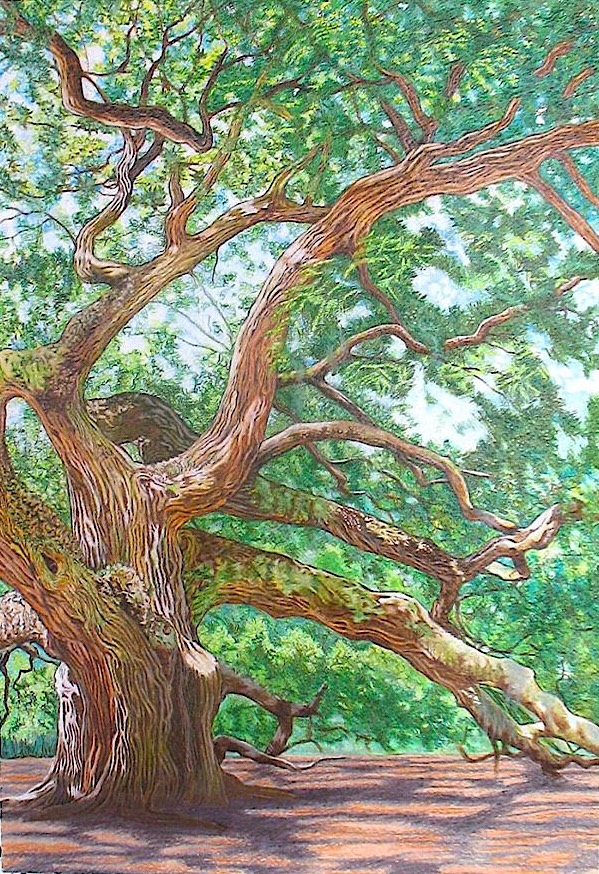
There was a belief that was common to both the tribes of the Celts and of the American Indians. The details are different, but the idea was similar—that a Sacred, colossal tree united the realms of the Earth. The roots were planted in the physical; then, life evolved on its way up the trunk, culminating in the spiritual, which resided in the branches.
The top of the tree was an over-world, where the Sky People dwelt. They were, variously, the star beings seen in the constellations, the godlike progenitors of human kind, or spirit forms who created and then dropped or threw down The People.
Animals seemed to exist already, and could talk and reason and bargain with the Sky People. Sometimes, a mischievous animal would bring a gift—fire or the wheel, or knowledge of agriculture—which would help humans survive and thrive. Because the Sky People were jealous of their exclusive domain, they would become angry with the offending animal, who would be punished by being marked with some physical characteristic—distinctive coloring, for instance—because of this intervention. The Magpie, Coyote, Rabbit, Spider and Raccoon are examples of this.
There was a middle realm in which humans lived, the physical world of day and work. What happened there was caused by, or a reflection of, the events and conditions of the other two worlds.
Last, or rather first, there was a lower region of sleep and dreams and ancestors. This place was seen as the source of life, and the place where all life returned when physical existence was over, to be reabsorbed by Death. The roots of the tree were in the lower region, recognizing that much of the motivation in our everyday lives and thought was unknowable in the light of day, but more powerful and basic than the wakeful mind.
The cultures holding these traditional beliefs lived in or near the great primeval forests, which were thousands of years old when humans first became unified into cultural groups, and the trees would have been seen as not only alive, but as conscious and aware.
In Europe, and the greater part of North America, these mighty forests blanketed thousands of square miles, only broken up by bodies of water, the highest mountains, or regions of steppe. Many of these old trees had massive trunks, or lifted so high into the air that their tops could not be seen from the ground, so it was a completely plausible idea that trees could touch the heavens. There were no tall buildings, and no air travel, and the largest of the great trees would not have been cut down without fear of terrible retribution from the spirit of the land.
The reverent beliefs of those times appear to be long past, and we, as a species, seem to inhale the forests, describing them as “resources;” buying and selling, in cavalier fashion, what took decades, perhaps hundreds, even thousands of years to become part of Nature’s magnificent design.
I’ve given up believing that angry Gods, Goddesses or invisible spirits would avenge Mother Earth for our abuses of the forests, but I do believe that the changes in planetary temperatures, beginning at the dawn of the Industrial Revolution, have reached a point in which climatic backlash is happening in front of our eyes. If we continue much longer to ignore or deny the obvious, the lands retribution for the demise of the great forests will be closer than we think.
© 2025 Laura J Merrill
Velvet Mesquite gives us some insight into our own issues. Do me a favor and click on the thing at the bottom of the screen that reads “Watch on YouTube.” The more views and likes I get, the more likely sites’ algorithms will bring my video up for others to see. Thanks!
Watch this on YouTube (see bottom left ⬇️) and please 👍🏻 subscribe and share with people that love nature and trees.

Sorry, haven’t posted much in a while.
I check out the headlines of the NY Times every day, and have made note of a few recent articles, of which I will give a brief rendition, over the next few days. Here’s the first 3:
The Church Forests of Ethiopia, by Jeremy Seifert, Dec. 3 2019
From an interview and video by Dr. Alemayehu Wassie, Forest Ecologist, working with priests and communities since 1992 to save Ethiopia’s rapidly shrinking church forests.
“In Ethiopian Orthodox teaching, a church–to be a church–should be enveloped by a forest. It should resemble the garden of Eden.
A hundred years ago the highland was one big continuous forest. That big continuous forest has been eaten up by agriculture. It is the church who has protected these forests and only their patronage has safeguarded them from destruction.
Over the past century, nearly all of Ethiopia’s native forests have been cleared to make way for farming and cattle grazing.
“Every plant contains the power of God, the treasure of God, the blessing of God. The church is within the forest; the forest is inside the church. In ecology culture the whole is greater than the sum of its parts. The mystery is to think beyond what we see. Everything is important and interlinked. So if you really care, we have to respect trees, the role of trees, and we have to learn to live with forests. We can bring back the landscape given that these church forests exist. That’s my hope, that’s my vision. ”

Owl rescued from ashes of Maria Fire by firefighters on patrol
Gretchen Wenner, Ventura County Star, Nov. 3, 2019
A Ventura County Fire Department hand crew was patrolling the fire line of the Maria Fire, which burned thousands of acres between Santa Paula, Saticoy and Somis during a Santa Ana wind event. The crew was in a eucalyptus grove looking for “hazard” trees: burnt-out trees that can fall and kill firefighters and civilians, when they saw a Great horned owl hopping around in the ashes. One crew member, firefighter Caleb Amico, approached the owl, who was docile, wrapping it in his flame-resistant jacket.
Firefighters brought the owl to Nicky Thole at the nonprofit Camarillo Wildlife Rehabilitation, Des Forges said. The bird’s wings were fine and no bones were broken.
“She thinks the bird inhaled smoke and became dazed and confused,” he said. The owl is expected to make a full recovery and will be released back into its territory when conditions are safe.
The fire crew named their feathered find before handing it off: Ram. A ram is the crew’s mascot and Amico and the other crew members are big fans of the Los Angeles Rams football team, Des Forges said.

Looking to Scientists to Expand Eco-Tourism Efforts,
By Abby Ellin, Nov. 13, 2019
Hotels, lodges and resorts are bringing in scientists to conduct serious academic inquiries while also offering nature tours, workshops and classes for guests. Two years ago, the Mashpi Lodge, a luxury hotel in Ecuador, opened a research lab just steps from its main lodge.
Carmen Soto, a research scientist with a master’s degree in ecology and natural resources, collaborates with José Koechlin, the founder and chief executive of Inkaterra Hotels in Peru. He offered Ms. Soto a full-time job to help him with a pest problem at the Lodge.
Within a year, Ms. Soto was the resident biologist and orchid specialist at that hotel and at Inkaterra Asociación, the company’s nonprofit organization. Since then, she and her team of nearly a dozen workers have helped identify 372 orchid species, 22 of which are new. While continuing to identify new species of birds, butterflies and flora in the cloud forest, she also organizes specialized excursions for guests and educational workshops for area schoolchildren. Today, Mashpi has 12 biologists on staff, and seven studies have been published about the frogs, flowers, butterflies and birds found there.
Eco-tourism has been a part of the travel industry for some time now, but some other companies have begun hiring scientists to conduct serious academic inquiry while also offering nature tours, workshops and classes for guests. Hotel owners and managers say their ecological efforts trump any financial hits they may take.
As Daydream Island Resort’s “Living Reef Manager,” Mr. Johhny Gaskell is one of six full-time resident marine biologists. He is responsible for the resort’s reef restoration program and protecting the creatures of the Living Reef, one of Australia’s largest man-made living coral reef lagoons. He also runs the Reef After Dark program, when he’ll jump into the ocean at night and live-stream his findings onto a giant screen for guests.
Eleanor Butler, the resident biologist at Soneva Jani resort, in the Maldives, is inviting guests to help resore the coral reefs surrounding the resort, which were being destroyed by the high temperatures of the 2016 El Niño event.
She believes she’s able to reach more people, about climate change and the importance of reefs, than if she were working in academia.
ALSO, an excerpt from Volume Three of Secret Voices from the Forest:
The Alabama Map Turtle, a companion of the Longleaf Yellow Pine

Commonly known as the “Sawback” turtle, because of a black, knobbed ridge on its back, the Alabama map turtle can be seen basking on brush piles, tree branches or trunks along river banks.
Researchers have recently discovered a turtle’s organs do not gradually break down or become less efficient over time, unlike most other animals. It was found that the liver, lungs, and kidneys of a 100-year-old turtle are virtually indistinguishable from those of a juvenile.
The inner layer of a turtle’s shell is made up of about sixty bones that include portions of the backbone and the ribs, meaning the turtle cannot crawl out of its shell. In most turtles, the outer layer of the shell is covered by horny scales called scutes that are part of its outer skin.
Turtles once had a complete set of teeth, like most other animals, but now all turtle species have beaks. Generally, once an organism stops producing teeth, the genes specific to teeth start to mutate and become non-functional, but in turtles, most of these tooth-specific enamel genes are still present and in reasonable shape despite turtles having lost their teeth well before birds even evolved, about 150-200 million years ago. This indicates that turtles have a really slow mutation rate.
The first primitive ancestors of turtles are believed to have existed about 220 million years ago. Their shell is thought to have evolved from bony extensions of their backbones and broad ribs that expanded and grew together to form a complete shell that offered protection at every stage of its evolution, even when the bony component of the shell was not complete. A genetic analysis suggests that turtles are a sister group to birds and crocodiles, the separation of the three estimated to have occurred around 255 million years ago.
The Alabama map turtle lives only in the Mobile Bay drainage basin, inhabiting flowing waters in areas of Alabama, Georgia, Florida, Mississippi and Louisiana. Because of its limited range, it is variously—according to state—listed as “rare,” “protected,” “near-threatened” or “a species of special concern,” because of habitat destruction and fragmentation, caused primarily by development, and by collection for the pet trade. Although sale of under-4-inch turtles is highly restricted by the FDA, and illegal in many states, dealers discovered a loophole in the regulation that allows for the sale of small turtles for educational purposes.
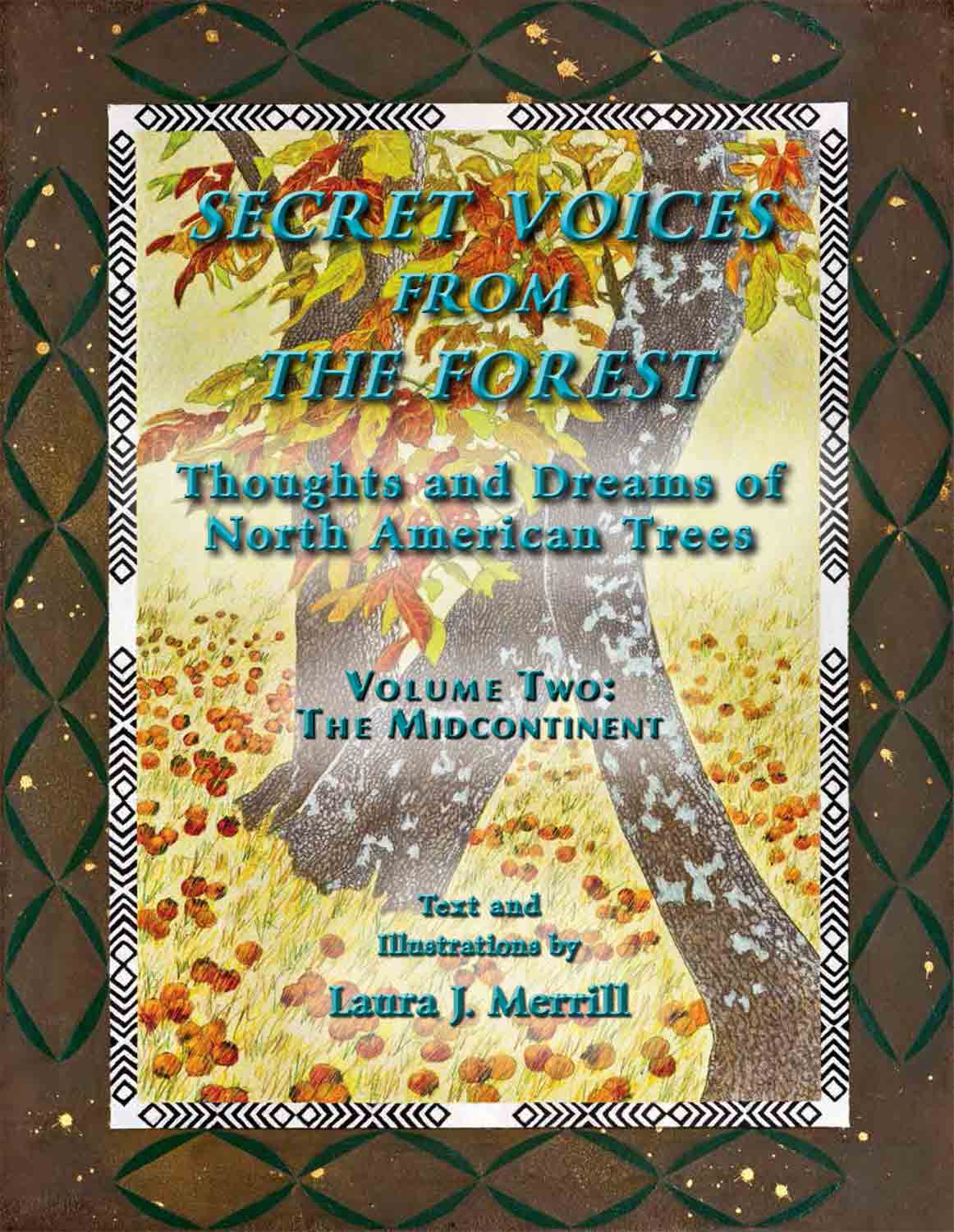
And, don’t forget that all 3 volumes of my book series, Secret Voices from the Forest, Thoughts and Dreams of North American Trees, are on sale on Amazon!



Getty Images
These days, when there is some new assault on Nature occurring almost daily, I find it difficult to locate stories about the environment that can give hope. More and more, I’m seeing that it’s up to those who, like we all did in the 1960s, see problems that are urgent, and are willing to not just speak truth to Power, but to put their bodies on the line.
So my first story is about the group called “Extinction Rebellion.” They are an international “non-violent civil disobedience activist movement.” Their co-founder, Gail Bradbrook, says that the the future of the planet depends upon actions such as theirs.
They believe that governments must declare a climate “emergency,” that nations like the U.K. must legally commit to reducing carbon emissions to net zero by 2025, and that a citizens’ assembly must be formed to “oversee the changes.” (Sounds like they don’t trust government!!)
They foresee severe restrictions on flying, drastically cutting back on the consumption of meat and dairy, and a massive increase in renewable energy, to name just a few of the radical changes needed.
For more information, you can just google them, but my source on this story was the BBC.

In other encouraging news, we find that,
“Automakers, Rejecting Trump Pollution Rule, Strike a Deal With California”
The New York Times, July 25, 2019, Coral Davenport and Hiroko Tabuchi
Ford, Volkswagen, Honda and BMW, in order to avoid having to have 2 separate operations, made a secret deal with California regulators that allow them to follow rules, increasing fuel efficiency, slightly less than the Obama standards, but still much stricter that those proposed by the Trump administration.
The Trump administration is suing California, but state officials vow to take the fight all the way to the Supreme Court.
Lots more information on this at:

T.J.Watt for U of B.C.
UBC scientists find high mutation rates generating genetic diversity within huge, old-growth trees
University of British Columbia News, Jul 8, 2019, Lou Corpuz-Bosshart
The original of this article is kind of scientific, so let me boil it down for you:
U. of British Columbia researchers studied some several-hundred-year-old Sitka spruce trees in Vancouver Island. After doing DNA sequencing, they found that a single tree, starting at the base and going all the way to the top, might have gone through up to 100,000 genetic mutations over its lifespan.
This opens a discussion of how trees evolve over time, passing on genetic changes to their offspring that may help them survive and adapt to environmental changes.

Chang W. Lee/NY Times
New York Awards Offshore Wind Contracts in Bid to Reduce Emissions,
By Ivan Penn, NYTimes, July 18, 2019
Technological advances have reduced the cost of wind turbines; as a result, NY State passed an ambitious law to reduce greenhouse emissions last month, and it has now reached an agreement for two large offshore wind projects, to be built off the coast of Long Island. They are supposed to start operation within the next five years.

cecile-belmont-jean-marc-cecile-et-dominique.jpg
A French Town’s Green Policies Aim to Win Over the Working Class
The NYTimes, July 25, 2019, By Constant Méheut
But Grande-Synthe, near the northern city of Dunkirk, stands out as an unlikely laboratory for working-class environmentalism. The town’s Green party mayor, Damien Carême, has a vision of “social environmentalism.” In his efforts to convince his voters that innovative green policies, such as the installation of LED bulbs in street lights, serving organic food in school cafeterias, grown by local farmers who lease their land from the government for a cut rate.
The town is one of the poorest in France, surrounded by a sprawling industrial park, filled with closed factories and apartment blocks, including France’s oldest nuclear plant.
The jury is still out on whether or not Carême’s policies will save the town, but we wish him luck.
********************************************************************************
Sorry it took me so long to get these posted. Just too much going on to think straight!
P.S. Look for my books, Secret Voices from the Forest—Thoughts and Dreams of North American Trees—Volume One: The West, Volume Two: Midcontinent, and Volume Three: The West. Coming eventually (probably in a year or two) Volume Four: Tropics and Deserts. You can find them on Amazon, by title.
 “What does ‘protecting people and forests,
supporting economic growth’ mean to you?”
Forest News, Gabrielle Lipton, July 12, 2018, Dateline: Indonesia
At the 2018 Asia-Pacific Rainforest Summit, Forest News spoke to the director for The Nature Conservancy about rethinking the way forests factor into development, if they are to keep giving us the things we want and need.
The initial economic growth of these countries has been fueled by harvesting and selling of timber. This area holds about 60% of the world’s population, and as people’s lifestyle improves, forested land disappears in favor of agriculture, animal husbandry and mining. This results in poor air quality because of carbon emissions.
The organizations attending the Summit are working to advance ideas about ways to help the population’s economic growth continue to expand without cutting down all the trees.
Read this article here.

T Agitprop—12 Artists on Climate Change, by Zoe Lescaze of the New York Times, August 22, 2018
A strongly visual article about the work of 12 contemporary artists who focus on several different aspects of climate change, such as rising sea levels, or connections to other living species and our affect on them, the destruction of beautiful natural landscapes, the extraction of resources from the land, the impact of more powerful storms on society and critically endangered species and the issue of extinction.
Visit the article for a look at some of their works and their stories.

From Angelique Chrisafis, in France, for The Guardian, August 24, 2018
Choose a Side: the Battle to Keep French Isle McDonald’s-Free
The Mayor of Ile d’Oleron, the second-biggest island off mainland france after Corsica, is a major tourist destination is leading the fight, saying the island is “not about mass consumption.” Others say, “Oleron is a beautiful place, it’s important to protect it. We don’t need McDonald’s in a place that is pioneering local organic food, sustainable development, zero waste and alternative ways of living that aren’t about mass consumption.”
The battle has been going on for 4 years. Recently, a court in Poitiers ruled that the town had no legal basis to stop McDonald’s and must let them come in or pay fines on a daily basis. The verdict on the appeal is due next month.
Read the article here.

Also from the New York Times:
Paris Bees at Work From Notre-Dame to the Luxembourg Gardens
Paris has seen a marked rise in urban beekeeping, with more than 1,000 hives atop landmark buildings as well as in community gardens across the city.
By Alissa J. Rubin, August 24, 2018
Hives have been on the roof of the Opera Garnier for over 30 years; there are hives on top of Notre-Dame Cathedral, and Luxembourg Gardens have been home to honeybees for over 150 years. They also give apiculture classes, with perhaps 200 people graduating every year.
Paris officials want to ensure that there will be enough bees to service the trees and flowers of the many local parks, gardens and cemeteries. “Perhaps one reason people now want to keep bees is that it’s a way of participating in the protection of the environment.”
Paris has all but ensured the relative purity of its honey by eliminating the use of pesticides in city parks and gardens, and forbidding pesticides on plantings on home terraces and roofs, as well as cemeteries.
Read the article here.
*************************************************
Remember, Secret Voices from the Forest—Volume Three: The East is now available, $32.95 on Amazon.

Highly aquatic, this beautiful snake can be found among floating vegetation in freshwater streams, along riverbanks and in cypress swamps and marshes of the coastal plain of southern North America. Not a great deal is known about

Herpsofnc.org
this non-venomous species, as it is very reclusive and spends most of its life in the water or hiding in available cover.
As an adult, the Rainbow snake eats only American eels. Landlubbers such as myself probably never consider that eels are fish, with a complicated life cycle that begins in the Sargasso Sea. Visit this page for the rest of the article.
Reblogged from Eben Diskin, June 5, 2018 – visit here for the full article:

Photo: Joachim Odelberg
The famed Highland Gorillas of the Rwanda National Park have apparently learned how to dismantle the traps that poachers have been setting for them, and have teamed up to do the job. Kick ass! Read the original – it’s not very long.
Rachel Hamalian, volunteer from Trees, Water and People, reports from Pine Ridge about the Lakota Solar Enterprises. They say this about themselves:

“In partnership with Trees, Water & People (TWP), Lakota Solar Enterprises founded and now operates the Red Cloud Renewable Energy Center (RCREC), where Native Americans from around the country come to receive hands-on training in renewable energy applications from fellow Native American trainers. RCREC’s facilities also include demonstration solar air furnaces, a solar electric system, straw bale home demonstration sites, a wind turbine, green houses and garden, buffalo from the Red Cloud herd, and wind break and shade trees. In addition to educating about the benefits of renewable energy, RCREC’s workshops are creating green jobs for residents of Pine Ridge, S.D., as well as visiting trainees from other tribes. As tribal leaders learn how to incorporate sustainable technology into housing plans, employment training, and energy strategies, the impact will increase exponentially.”
from June 27, 2018, both positive and negative. Please visit the page for the stories in their entirety. The reporters are Henry Fountain, Livia Albeck-Ripka, John Schwartz and Brad Plumer

Bad News for Ozone Layer Recovery (Getty Images)
1) Research by an investigative reporter from the Times, stationed in Beijing, has shown that there’s a high probability that several businesses in China are supplying and/or using CFC-11, even though it’s long been banned. This could delay the restoration of atmospheric ozone by 10 years or more.

Maine Lobster – Greta Rybus for The New York Times
2) Apparently climate change can be bad for some, good for others. There has been a recent boom of Maine’s lobster fishery. Warming waters and conservation efforts by the lobstermen has helped the industry increase by 500%.

Carl de Souza:Agence France-Presse — Getty Images
3) Brazil isn’t doing so well in it’s efforts to protect its rain forests, with more than 3 million acres cleared by ranchers, farmers and miners. Not only are fires set deliberately, to clear the land, but a severe drought last year caused the fires to spread rapidly, out of control, making the losses much worse. Double-whammy, causing levels of CO2 in the atmosphere to increase ever more.
In all the world’s tropical forests lost roughly 39 million acres of trees. This is only slightly less than the total losses from 2016. Tropical forests are shrinking overall, with losses outweighing the gains. And they’re just talking about tropical forests. . .

Arkansas Rig – Andrea Morales for The New York Times
4) From a new study that came out in mid-June, in the journal Science, we see that much, much more methane (the main component of natural gas) is leaking from domestic oil and gas operations than the industry admits – nearly 2 ½ percent – you might think, “That’s not much,” but in truth, it’s enough to fuel 10 million homes for a year.
Methane has the capacity to warm the planet 80 times as much as the same amount of carbon dioxide, over a 20-year period, if it escapes into the atmosphere before being burned. If the rate of leakage rises above 4 percent, it could actually be worse for climate change than burning coal!
The good news is that most of the leakage is fixable at a relatively low cost, and the fix would pay for itself with income from the saved gas, which is estimated to be some $2 billion a year. Exxon Mobil, the largest gas producer in the country, hopes to reduce its methane emissions by 15 percent over the next year and a half.
Not sure if that’s a sufficient sense of urgency.
**************************************
 news from (and about) the trees