arctic ice melting, bird flyway, books, cleaner car emissions, Environment, environmental news in New Mexico, global warming, Lebanon, Nature, oceans, Sunflower, Uncategorized, Weather, Wildlife

A little more news…

NOAA Climate.gov

Our Future Depends on the Arctic
Save it from the ravages of warming and we can save the planet.

By Durwood J. Zaelke and Paul Bledsoe
The authors work for groups focused on climate policy.
Dec. 14, 2019, NYTimes California Today

Delegates from all over the world spent two weeks in Madrid, trying to work out how to reach a global goal of net zero emissions by 2050. As the United Nations’ secretary general, António Guterres, warned in opening the meeting: “The point of no return is no longer over the horizon. It is in sight and hurtling toward us.”

Perhaps nowhere is that more true than in the Arctic. The surface air there is warming at twice the global rate and temperatures over the past five years have exceeded all previous records since 1900.

A study published in Geophysical Research Letters in June described the catastrophic consequences of losing the Arctic’s reflective summer sea ice, which reflects incoming solar warming back to space, that would otherwise be absorbed by the ocean. Equal to an extra 25 years of current levels of emissions, it will push us more quickly towards catastrophic damage: more intense heat waves and coastal flooding, extinctions of species and threats to food supplies.

The heating up of the Arctic is also speeding the thawing of permafrost, causing the release of more carbon dioxide and methane, a greenhouse gas 84 times more potent than carbon dioxide when measured over 20 years, along with nitrous oxide, a powerful long-lived climate pollutant.

If we are to keep the Arctic ice strong, we not only need to cut diesel emissions, limit methane emissions from landfills, and keep strict regulations on refrigerants in air-conditioners and consumer products. California has cut these emissions by more than 90% since the 1960s.

Several other geoengineering ideas are being floated, such as putting a covering of white sand over first year ice, to enhance its reflectivity, or introduce particles into the atmosphere to reflect solar radiation. There are potential risks with these procedures, and there could be experiments to see if the risks are worth the effort.

**********************************************

em012617h

New Clean-Car Rules for New Mexico,
December 4, 2019, Sierra Club

Gov. Michelle Lujan Grisham announced that New Mexico will join 14 other states in adopting clean-car standards requiring new cars sold in the state to emit fewer greenhouse gases. The standards also mandate an increasing percentage of cars to have zero emissions.

Lujan Grisham made the announcement in September at Climate Week in New York City, where U.S. governors met to discuss states advancing ambitious climate action in the face of federal inaction. The move came on the heels of the announcement that the Trump administration is revoking California’s authority to set fuel-efficiency and greenhouse-gas standards stricter than federal standards. California and nearly two dozen other states are suing the administration over the attack.

*****************************************************

Diego Ibarra Sanchez

Where Eagle Feathers Fall Like Snow,
By Helen Sullivan, NYTimes Climate Forward

January 6, 2020

Adonis Al Khatib, of the Society for the Protection of Nature in Lebanon, works with students, community leaders and hunting associations to instill sustainable hunting practices. Hunting is ubiquitous in Lebanon, which has the 11th-highest rate of small-arms ownership in the world. Half to three-quarters of boys own guns, and birds can be a common target.

Among the Society’s top concerns is protecting the 2.5 billion migratory birds that pass over the country twice a year. During those journeys, 2.6 million migratory birds are shot or trapped illegally, according to BirdLife International; S.P.N.L. is that organization’s official partner in Lebanon. As other countries examine why some of their protected birds aren’t returning from migration, Lebanon has come under the spotlight.

Lebanon’s topography is dominated by two long mountain ranges. Various bird migration routes, or flyways, pass through the country; when squeezed between mountains, the routes narrow, forming bottlenecks. The bottlenecks create conditions for satisfying bird-watching, and make it easier for organizations like S.P.N.L. to conduct bird counts.

But the bottlenecks also serve hunters. At certain points throughout the country, the narrow flyways funnel birds through elevated vantage points from which hunters can get easy shots.

Assad Serhal, a founder of S.P.N.L., is a reformed hunter. The organization has lobbied Lebanon’s government for stricter anti-poaching laws, and has reintroduced a traditional Islamic system of conservation to Lebanon.

Twenty years ago, on very old military maps, he noticed areas labeled, “hima.” In Arabic, hima can mean refuge, protected area, private pasture or homeland; “Humat al-Hima” (Defenders of the Homeland) is Tunisia’s national anthem. Mr. Serhal had known vaguely of the idea, but had no idea that hima had existed in Lebanon.

He discovered that the concept dates back more than 1,000 years, with a mention in the Quran. Muhammad had designated certain areas as hima, which meant they were subject to rules about grazing, hunting or even trade. On Mr. Serhal’s maps, it turned out, hima signified communal areas. The word’s appearance gave him an idea: Perhaps he could revive its traditional meaning.

Mr. Serhal thought that, instead, hima might be accepted as a traditional concept; it also would include communities and municipalities in the design of the conservation areas. Hima wouldn’t be just about protecting nature, Mr. Serhal said; it would be “nature plus people.” When S.P.N.L. helped a community design a local hima, the group suggested additional conservation methods, like banning hunting.

The first hima was established in southern Lebanon in 2004. Today there are 25; they have been given legal status by the government and cover more land than Lebanon’s national parks. Five of the designated hima are also what BirdLife calls “Important Bird Areas,” of which there are 15 in the country.

***************************************

And in “Spotlight On”

http---cdn.cnn.com-cnnnext-dam-assets-190815135835-03-north-dakota-sunflower

 Sunflower

Our native Sunflower was domesticated and cultivated by indigenous Americans, possibly as long as five thousand years ago, when seeds were selected for the best size and shape to produce the largest crop. They were used to make flour, cooking oil, dye, and medicinal ointments. It has been suggested that the sunflower was domesticated before the maize plant. Some American Indian tribes planted sunflowers as a “fourth sister” to the combination of corn, beans, and squash.
Early Spanish explorers took seeds back to Europe around 1500. In 1716, the English granted a patent for a process of squeezing oil from sunflower seed. By 1769, sunflower oil had become a popular commodity with members of the Russian Orthodox Church, because it was one of the few oils not forbidden during Lent.
By 1830, the manufacture of sunflower oil had become a commercial enterprise, and Russian farmers were growing over two million acres of the plant. By 1880, sunflower seeds called the “Mammoth Russian” were being marketed in catalogs in the U.S.
Canada began the first government sponsored breeding program in 1930, and because of high demand for sunflower oil, production grew. More recently, because of increasing concerns about high cholesterol in the diet, demand increased further, and U.S. production took off. Today the sunflower is the most important native crop plant produced in the United States. (from Volume 2, Elm Companions)

*******************************************

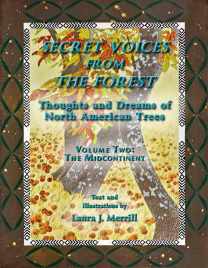
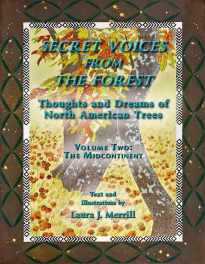
And again, don’t forget you can buy all three volumes of Secret Voices from the Forest, Thoughts and Dreams of North American Trees, on Amazon.

cover   cover-SV2   Vol. 3 - The East copy


Standard
Alabama map turtle, Eco-tourism, Ethiopia, forests, Maria Fire, protecting rain forests, rescue animals, trees, Uncategorized

News from The Treetalker

Nature.com

Sorry, haven’t posted much in a while.

I check out the headlines of the NY Times every day, and have made note of a few recent articles, of which I will give a brief rendition, over the next few days. Here’s the first 3:

The Church Forests of Ethiopia, by Jeremy Seifert, Dec. 3 2019

From an interview and video by Dr. Alemayehu Wassie, Forest Ecologist, working with priests and communities since 1992 to save Ethiopia’s rapidly shrinking church forests.

“In Ethiopian Orthodox teaching, a church–to be a church–should be enveloped by a forest. It should resemble the garden of Eden.

A hundred years ago the highland was one big continuous forest. That big continuous forest has been eaten up by agriculture. It is the church who has protected these forests and only their patronage has safeguarded them from destruction.

Over the past century, nearly all of Ethiopia’s native forests have been cleared to make way for farming and cattle grazing.

“Every plant contains the power of God, the treasure of God, the blessing of God. The church is within the forest; the forest is inside the church. In ecology culture the whole is greater than the sum of its parts. The mystery is to think beyond what we see. Everything is important and interlinked. So if you really care, we have to respect trees, the role of trees, and we have to learn to live with forests.  We can bring back the landscape given that these church forests exist. That’s my hope, that’s my vision. ” 

ram, post rescue
Owl rescued from ashes of Maria Fire by firefighters on patrol
Gretchen Wenner, Ventura County Star, Nov. 3, 2019

A Ventura County Fire Department hand crew was patrolling the fire line of the Maria Fire, which burned thousands of acres between Santa Paula, Saticoy and Somis during a Santa Ana wind event.  The crew was in a eucalyptus grove looking for “hazard” trees: burnt-out trees that can fall and kill firefighters and civilians, when they saw a Great horned owl hopping around in the ashes. One crew member, firefighter Caleb Amico, approached the owl, who was docile, wrapping it in his flame-resistant jacket.

Firefighters brought the owl to Nicky Thole at the nonprofit Camarillo Wildlife Rehabilitation, Des Forges said. The bird’s wings were fine and no bones were broken.

“She thinks the bird inhaled smoke and became dazed and confused,” he said. The owl is expected to make a full recovery and will be released back into its territory when conditions are safe.

The fire crew named their feathered find before handing it off: Ram. A ram is the crew’s mascot and Amico and the other crew members are big fans of the Los Angeles Rams football team, Des Forges said.

Mashpi Lodge, Ecuador

Looking to Scientists to Expand Eco-Tourism Efforts,
By Abby Ellin, Nov. 13, 2019

Hotels, lodges and resorts are bringing in scientists to conduct serious academic inquiries while also offering nature tours, workshops and classes for guests. Two years ago, the Mashpi Lodge, a luxury hotel in Ecuador, opened a research lab just steps from its main lodge.

Carmen Soto, a research scientist with a master’s degree in ecology and natural resources, collaborates with José Koechlin, the founder and chief executive of Inkaterra Hotels in Peru. He offered Ms. Soto a full-time job to help him with a pest problem at the Lodge.

Within a year, Ms. Soto was the resident biologist and orchid specialist at that hotel and at Inkaterra Asociación, the company’s nonprofit organization. Since then, she and her team of nearly a dozen workers have helped identify 372 orchid species, 22 of which are new. While continuing to identify new species of birds, butterflies and flora in the cloud forest, she also organizes specialized excursions for guests and educational workshops for area schoolchildren. Today, Mashpi has 12 biologists on staff, and seven studies have been published about the frogs, flowers, butterflies and birds found there.

Eco-tourism has been a part of the travel industry for some time now, but some other companies have begun hiring scientists to conduct serious academic inquiry while also offering nature tours, workshops and classes for guests. Hotel owners and managers say their ecological efforts trump any financial hits they may take.

As Daydream Island Resort’s “Living Reef Manager,” Mr. Johhny Gaskell is one of six full-time resident marine biologists. He is responsible for the resort’s reef restoration program and protecting the creatures of the Living Reef, one of Australia’s largest man-made living coral reef lagoons. He also runs the Reef After Dark program, when he’ll jump into the ocean at night and live-stream his findings onto a giant screen for guests.

Eleanor Butler, the resident biologist at Soneva Jani resort, in the Maldives, is inviting guests to help resore the coral reefs surrounding the resort, which were being destroyed by the high temperatures of the 2016 El Niño event.

She believes she’s able to reach more people, about climate change and the importance of reefs, than if she were working in academia.

ALSO, an excerpt from Volume Three of Secret Voices from the Forest:

The Alabama Map Turtle, a companion of the Longleaf Yellow Pine

Unknown     

Commonly known as the “Sawback” turtle, because of a black, knobbed ridge on its back, the Alabama map turtle can be seen basking on brush piles, tree branches or trunks along river banks.
Researchers have recently discovered a turtle’s organs do not gradually break down or become less efficient over time, unlike most other animals. It was found that the liver, lungs, and kidneys of a 100-year-old turtle are virtually indistinguishable from those of a juvenile.
The inner layer of a turtle’s shell is made up of about sixty bones that include portions of the backbone and the ribs, meaning the turtle cannot crawl out of its shell. In most turtles, the outer layer of the shell is covered by horny scales called scutes that are part of its outer skin.
Turtles once had a complete set of teeth, like most other animals, but now all turtle species have beaks. Generally, once an organism stops producing teeth, the genes specific to teeth start to mutate and become non-functional, but in turtles, most of these tooth-specific enamel genes are still present and in reasonable shape despite turtles having lost their teeth well before birds even evolved, about 150-200 million years ago. This indicates that turtles have a really slow mutation rate.
The first primitive ancestors of turtles are believed to have existed about 220 million years ago. Their shell is thought to have evolved from bony extensions of their backbones and broad ribs that expanded and grew together to form a complete shell that offered protection at every stage of its evolution, even when the bony component of the shell was not complete. A genetic analysis suggests that turtles are a sister group to birds and crocodiles, the separation of the three estimated to have occurred around 255 million years ago.
The Alabama map turtle lives only in the Mobile Bay drainage basin, inhabiting flowing waters in areas of Alabama, Georgia, Florida, Mississippi and Louisiana. Because of its limited range, it is variously—according to state—listed as “rare,” “protected,” “near-threatened” or “a species of special concern,” because of habitat destruction and fragmentation, caused primarily by development, and by collection for the pet trade. Although sale of under-4-inch turtles is highly restricted by the FDA, and illegal in many states, dealers discovered a loophole in the regulation that allows for the sale of small turtles for educational purposes.

And, don’t forget that all 3 volumes of my book series, Secret Voices from the Forest, Thoughts and Dreams of North American Trees, are on sale on Amazon!

Vol. 3 - The East copy    cover     cover-SV2

Standard
Uncategorized

Not just a physical thing…

What a wonderful essay! Pass it on.

sharonstjoan's avatarEchoes in the Mist

One 1600px-Tongass_National_Forest_4

By Sharon St Joan

The earth is not just a physical thing. The same is true of the trees, the flowers, the clouds in the sky, the mountains, the rivers, the valleys, the oceans. And, of course, all the animals.

The other day I listened to a spokesperson for a major environmental organization explaining on national television the reasons why it’s not a good idea to log the Tongass National Forest in Alaska. I’m not going to give his name because I’m about to criticize him – even though he spoke well and gave good, rational arguments. But I felt there was an essential element missing. I don’t honestly remember all the points that he made, but they may have gone something like this. The Tongass National Forest puts a significant percentage of the earth’s oxygen into the air. It is the largest temperate forest in the world. It is…

View original post 1,598 more words

Standard
cutting pollution, energy efficiency, Environment, forests, global warming, Green Movement, protecting rain forests, Renewable Energy, trees, Uncategorized, windfarms

News from The Treetalker

Getty Images

Getty Images

These days, when there is some new assault on Nature occurring almost daily, I find it difficult to locate stories about the environment that can give hope. More and more, I’m seeing that it’s up to those who, like we all did in the 1960s, see problems that are urgent, and are willing to not just speak truth to Power, but to put their bodies on the line.

So my first story is about the group called “Extinction Rebellion.” They are an international “non-violent civil disobedience activist movement.” Their co-founder, Gail Bradbrook, says that the the future of the planet depends upon actions such as theirs.

They believe that governments must declare a climate “emergency,” that nations like the U.K. must legally commit to reducing carbon emissions to net zero by 2025, and that a citizens’ assembly must be formed to “oversee the changes.” (Sounds like they don’t trust government!!)

They foresee severe restrictions on flying, drastically cutting back on the consumption of meat and dairy, and a massive increase in renewable energy, to name just a few of the radical changes needed.

For more information, you can just google them, but my source on this story was the BBC.

shutterstock_554001493

In other encouraging news, we find that,
“Automakers, Rejecting Trump Pollution Rule, Strike a Deal With California”
The New York Times, July 25, 2019, Coral Davenport and Hiroko Tabuchi

Ford, Volkswagen, Honda and BMW, in order to avoid having to have 2 separate operations, made a secret deal with California regulators that allow them to follow rules, increasing fuel efficiency, slightly less than the Obama standards, but still much stricter that those proposed by the Trump administration.

The Trump administration is suing California, but state officials vow to take the fight all the way to the Supreme Court.

Lots more information on this at:

TJ Watt

T.J.Watt for U of B.C.

UBC scientists find high mutation rates generating genetic diversity within huge, old-growth trees
University of British Columbia News, Jul 8, 2019, Lou Corpuz-Bosshart

The original of this article is kind of scientific, so let me boil it down for you:

U. of British Columbia researchers studied some several-hundred-year-old Sitka spruce trees in Vancouver Island. After doing DNA sequencing, they found that a single tree, starting at the base and going all the way to the top, might have gone through up to 100,000 genetic mutations over its lifespan.

This opens a discussion of how trees evolve over time, passing on genetic changes to their offspring that may help them survive and adapt to environmental changes.

Read the story at:

800px-Alpha_Ventus_Windmills

Chang W. Lee/NY Times

New York Awards Offshore Wind Contracts in Bid to Reduce Emissions,
By Ivan Penn, NYTimes, July 18, 2019

Technological advances have reduced the cost of wind turbines; as a result, NY State passed an ambitious law to reduce greenhouse emissions last month, and it has now reached an agreement for two large offshore wind projects, to be built off the coast of Long Island. They are supposed to start operation within the next five years.

More of this article at:


cecile-belmont-jean-marc-cecile-et-dominique

cecile-belmont-jean-marc-cecile-et-dominique.jpg

A French Town’s Green Policies Aim to Win Over the Working Class
The NYTimes, July 25, 2019, By Constant Méheut

But Grande-Synthe, near the northern city of Dunkirk, stands out as an unlikely laboratory for working-class environmentalism. The town’s Green party mayor, Damien Carême, has a vision of “social environmentalism.” In his efforts to convince his voters that innovative green policies, such as the installation of LED bulbs in street lights, serving organic food in school cafeterias, grown by local farmers who lease their land from the government for a cut rate.

The town is one of the poorest in France, surrounded by a sprawling industrial park, filled with closed factories and apartment blocks, including France’s oldest nuclear plant.

The jury is still out on whether or not Carême’s policies will save the town, but we wish him luck.

Read more on this story at:

********************************************************************************

Sorry it took me so long to get these posted. Just too much going on to think straight!

Vol. 3 - The East copy   cover-SV2   cover

P.S. Look for my books, Secret Voices from the Forest—Thoughts and Dreams of North American Trees—Volume One: The West, Volume Two: Midcontinent, and Volume Three: The West. Coming eventually (probably in a year or two) Volume Four: Tropics and Deserts. You can find them on Amazon, by title.


Standard
Children taking Action, Dolphins, endangered species, Environment, green living, Green Movement, hydrogen fuel, invasive species, Nature, oceans, plants, Renewable Energy, self-sustainability, Uncategorized, water purification, Whales

News from The Treetalker

Invasive, native marsh grasses may provide similar benefits to protected wetlands, Science Daily, via N.C. State University

Researchers here have noticed that the Common reed, which is an invasive species, has many of the same benefits for protected wetlands as the native marsh grasses it is crowding out, such as equivalent or even better levels of carbon storage, erosion prevention and plant diversity.

A great deal of money is spent trying to eradicate it, this research could impact management strategies, since this species protects shorelines from erosion by spreading more quickly. Shoreline erosion is a major problem, with rising seas.

read more here.

Seth Theuerkauf

Photo: Seth Theuerkauf

Researchers create hydrogen fuel from seawater, Stanford University, March 18, 2019

A “Water Engine” splits the molecules in water to access the hydrogen, which is then used as alternative energy (in hydrogen powered vehicles, for instance.) However, the existing water-splitting methods rely on highly purified water, which is a precious resource and costly to produce.

Stanford researchers have devised a way to generate hydrogen fuel using solar power, electrodes and saltwater from San Francisco Bay.

Splitting water into hydrogen and oxygen with electricity — called electrolysis — is a simple and old idea: a power source connects to two electrodes placed in water. When power turns on, hydrogen gas bubbles out of the negative end — called the cathode — and breathable oxygen emerges at the positive end — the anode.

But negatively charged chloride in seawater salt can corrode the positive end, limiting the system’s lifespan. The team wanted to find a way to stop those seawater components from breaking down the submerged anodes. They discovered that if they coated the anode with layers that were rich in magnetically negative charges, the layers repelled chloride and slowed down the decay of the underlying metal.

The surprisingly quick and simple solution is detailed in the following article, which you can read here.

H. Dai, Yun Kuang, Michael Kenney

H. Dai, Yun Kuang, Michael Kenney

Schools’ climate strike: Young people protest across EnglandBBC News, March 15, 2019Young people who have skipped school to join climate change protests across England have told the BBC there is no point in learning when their future is at risk.Thousands of schoolchildren have flooded into city and town centers across the country as classrooms around the world were abandoned for a day of demonstration. Some of their administrators were not in favor of the demonstrations, and said there would be consequences for skipping classes. One student responded, “I really don’t care what consequences they give us, it’s more important that we fight for our future. This is the world we’re going to have to live in.”Read more here

_106038262_danny

An Elusive (Recently Discovered) Whale Is Found All Around the Worldby Karen Weintraub, for The New York Times, March 22, 2019.Researchers are learning about a newly identified species of baleen whales, tracing sightings and sounds to learn that they stay mainly in tropical waters. Salvatore Cerchio stunned the small world of whale science in 2015 when he found examples of a new species in the wild for the first time. Now, he’s mapped the habitat of that species, called Omura’s whale after Hideo Omura, a prominent Japanese whale biologist.The surprise in the new study, published in Frontiers in Marine Science, is that Omura’s whales, though little seen, are widespread across the tropical world.A researcher found a population off the northwest coast of Madagascar, where he works, and compiled reports of sightings from Japan, Australia, Brazil and off the coasts of Indonesia, among others. In total, from photographs, audio recordings, museums and documents, he identified 161 accounts of Omura’s whales in 95 locales.Technological innovation in recording devices, advances in genetic analysis — and simply knowing what to look for — seem to have led to the new insights. Scientists said the finding is a reminder of how little we actually know about what goes on in the world’s oceans.Read details here.

photo quora

Photo: Earth.com

Also, this week, “Spotlight On:” the Atlantic spotted dolphin…

atlantic_spotted_dolphin_stenella_frontalis

Photo: Quora

and remember, you can find all three volumes of “Secret Voices from the Forest, Thoughts and Dreams of North American Trees, on Amazon.

Make sure you buy them from me personally. There are people selling them for some outrageously high prices, which is some new weird scam. Vols 1 & 2 are $28.95, and Vol 3 is $32.95.

Vol. 3 - The East copy   cover-SV2  cover


Standard
endangered species, Environment, global warming, Green Movement, habitat restoration, methane from livestock industry, Nature, Uncategorized

News from The Treetalker

Courtesy WhatWhenHow

Courtesy WhatWhenHow.com

Why large forest fires may not be a big threat to some endangered animals, January 29, 2019, ScienceDaily. Source: Oxford University Press USA

Spurred by climate change, megafires in western North America are becoming more frequent, causing speculation that endangered species will have an even more difficult surviving.

The Great Gray Owl, endangered in California, is a resident of Yosemite National Park and Stanislaus National Forest, which are areas that were badly burnt in the 2013 Rim Fire, experiencing a 104,000 acre burn.

In surveys covering a 3-year period following the fire, it was found that, rather than decreasing in number, the Grey Owls have adjusted to the terrain well, using large trees that were killed for nesting, and finding plentiful food in the rodent populations that have increased, due to more meadow area. Read the rest of the article here.

Neil Palmer:CIAT

Cattle urine’s planet-warming power can be curtailed with land restoration, January 29, 2019, Science News. Source: International Center for Tropical Agriculture (CIAT)

The exceptional climate-altering capabilities of cattle are mainly due to methane, which they blast into the atmosphere during their daily digestive routine. Cattle urine is a lesser-known climate offender. It produces nitrous oxide (N2O), which has warming power far greater than that of carbon dioxide (CO2), the main driver of global warming. A new study shows that these N2O emissions can be significantly curbed by healthy cattle pastures.

In the majority of test sites, degraded pastures emitted significantly more N2O — sometimes up to three times as much, than restored pasture.

Degraded livestock land is generally characterized by overgrazing, soil compaction, loss of organic material and low levels of nutrients and soil carbon. Large-scale land restoration with improved forage grasses, rotational grazing and the addition of shrubs and trees, could significantly mitigate the negative climate effects wrought by degradation. In addition to reducing N2O emissions, restored landscapes generally contain more carbon, have healthier soils and more robust and productive livestock. Find the rest of this article here.

Odd Andersen:Agence France-Presse — Getty Images

Teenagers Emerge as a Force in Climate Protests Across Europe, By Milan Schreuer, Elian Peltier and Christopher F. Schuetze, for the NYTimes, Jan. 31, 2019

Tens of thousand of children skipped school in Belgium on Thursday to join demonstrations for action against climate change, part of a broader environmental protest movement across Europe that has gathered force over the past several weeks.

In Germany, France, Sweden, Switzerland and elsewhere, activists have come together on social media to gather in large numbers and without much apparent preparation, the protests taking a different shape in each country.

In Germany, students have protested on Fridays, communicating mainly through the messaging app WhatsApp; in Belgium, they organize on Facebook and have skipped school by the thousands on four consecutive Thursdays.

Last Sunday, climate protests in Brussels swelled to an estimated 100,000 people of all ages. That same day, an estimated 80,000 took part in cities across France — more than turned out for the “Yellow Vest” protests the day before.

The climate movement has no obvious leaders or structure, but young people feel that most older people do not feel the urgency that the young do about global warming, and want their governments to take action while there is still time. For the rest of this article, click here.

Johnny Milano for The New York Times

Global Warming Concerns Rise Among Americans in New Poll, by John Schwartz, for the NYTimes, Jan. 22, 2019

Some 73 percent of Americans polled online late last year by the Yale Program on Climate Change Communication, said that global warming was happening, the report found, a jump of 10 percentage points from 2015 and three points since last March. This suggests that climate change has moved out of the realm of the hypothetical for a wide majority of Americans.

Americans’ growing understanding of global warming is part of a long-term trend, which is attributed to the recent increase of extreme weather events with plausible connections to a warming planet, and to the publicity that surrounded two major scientific reports on climate change last year. For more on this, click here.

Wensum Alliance

Norfolk study shows new ditches could help improve rivers, by Maggie Dolan and Nic Rigby for the  BBC.

The amount of harmful sludge entering rivers from farmers’ fields can be more than halved with special ditches, a new study by The Rivers Trust found. Its research showed only 14% of UK rivers are currently in a healthy state.

That health can be damaged by sediment containing fertilizer chemicals which can harm water quality and fish.

The study by the University of East Anglia (UEA) and the Wensum Alliance used traps (pictured) near the Blackwater – a tributary which flows into the River Wensum at Lenwade, which in turn flows through Norwich. They then tested the water downriver and found a 58% reduction in sediment year on year.

Traps were also placed near roads, which can also add pollution to waterways. For more on this, click here.

Getty Images/ Kean Collection

And, lastly, I saw this article in this morning’s Washington Post’s daily newsletter, “Today’s WorldView.”  Really fascinating.

The salient points to me were, “Scientists from University College London, U.K. estimate that 60 million people were living across the Americas at the end of the 15th Century, and that this was reduced to just five or six million within a hundred years, eliminated by introduced disease (smallpox, measles, etc), warfare, slavery and societal collapse. Vast swaths of agricultural land was then reclaimed by fast-growing trees and other vegetation. This pulled down enough carbon dioxide (CO₂) from the atmosphere to eventually chill the planet.”

Read the article at this link.

See you next time, whenever that might be! 

Standard
salamanders, Uncategorized

News from The Treetalker

Today, for your holiday reading, four articles about salamanders, all from the New York Times. I found they have a number of articles about these sometimes exotic creatures, going back a few years, although these were all published in 2018.

“A Salamander of Legend Emerges From Southern Swamps,”
by Asher Elbein, Dec. 14, 2018

“It’s eel-shaped and leopard-spotted, and it has no hind-limbs. It grows to two feet long. And yet until recently, hardly anyone had ever seen it.

A team of researchers has discovered of new species of salamander in the pine forests of northern Florida and southern Alabama. The so-called reticulated siren is the largest vertebrate found in the United States in decades, and the first new member of its family since 1944.”

This is a link to the entire, fascinating article.

18SCI-SALAMANDER1-jumbo-v2

Photo: David Steen

“Vanishing in the Wild, These Salamanders Found Refuge in a Convent,”
by Geoffrey Giller, July 30, 2018

“The Basílica de Nuestra Señora de la Salud, built in the 1500s with whitewashed walls and red stone columns, hosts a thriving colony of endangered salamanders. Scientists call them Ambystoma dumerilii, but the nuns in Pátzcuaro, Mexico call them achoques.

The achoques live their entire lives underwater and keep the external gills that most salamanders have only as aquatic larvae.

Carefully tended by the nuns, about 300 achoques live in glass aquaria and white enamel bathtubs lining the walls of a long hallway and two adjoining rooms in the convent. The nuns support themselves partly by selling a cough syrup called jarabe made from the salamanders’ skin.

They are found nowhere but Lake Pátzcuaro, and outside the convent their numbers are falling fast. This colony may be critical to the salamanders’ prospects in the wild.”

A link to the article is here.

31SCI-SALAMANDERS10-jumbo

“China’s Giant Salamanders Pose a Conservation Conundrum,”
by Rachel Nuwer, June 4, 2018

“The Chinese giant salamander, the world’s largest amphibian and a critically endangered species, has quietly slipped toward extinction in nature. Following an exhaustive, years long search, researchers recently reported that they were unable to find any wild-born individuals.

Millions of giant salamanders live on farms scattered throughout China, where the animals are bred for their meat. But another study by Dr. Turvey and his colleagues shows that reintroducing farmed animals is not a simple solution for saving the species in the wild.

In the wild, Chinese giant salamanders were not just one species but at least five, and perhaps as many as eight. On farms, they are being muddled into a single hybridized population adapted to no particular environment.

“The farms are driving the extinction of most of the species by homogenizing them,” said Robert Murphy, a co-author and senior curator of herpetology at the Royal Ontario Museum. “We’re losing genetic diversity and adaptations that have been evolving for millions of years.”

Many have been released into the wild, in the hope of maintaining the species, but the genetic mixup has created an issue of “pure” wild species.

Here is a link to the article.  www.nytimes.com/2018/06/04/science/giant-salamanders-china.html?action=click&module=RelatedLinks&pgtype=Article

merlin_137526453_cee74480-71fd-4a25-a98f-81f12211abdd-jumbo

photo credits: Goh Chai Hin/Agence France-Presse — Getty Images

merlin_138480822_9f0105cf-277b-4877-9888-c2c7e4f9ba71-jumbo

“The Smiling Axolotl Hides a Secret: A Giant Genome,”
by Nicholas Bakalar, Feb. 1, 2018

“Scientists have decoded the genome of the axolotl, the Mexican amphibian with a Mona Lisa smile. It has 32 billion base pairs, which makes it ten times the size of the human genome, and the largest genome ever sequenced.

The axolotl, endangered in the wild, has been bred in laboratories and studied for more than 150 years. It has the remarkable capacity to regrow amputated limbs complete with bones, muscles and nerves; to heal wounds without producing scar tissue; and even to regenerate damaged internal organs.

This salamander can heal a crushed spinal cord and have it function just like it did before it was damaged. This ability, which exists to such an extent in no other animal, makes its genes of considerable interest.

This is the first salamander genome ever sequenced. The reason it took so long is that it has so many repetitive parts. The study’s author believes that it will open up a wealth of opportunities in studying how organisms regenerate.”

Here is the link.  www.nytimes.com/2018/02/01/science/axolotl-genes-limbs.html?action=click&module=RelatedLinkspgtype=Article

06SCI-NUMBER-jumbo

photo credit: Research Institute of Molecular Pathology

Spotlight on:

Harbor seal    
Although Harbor seals have the greatest geographical range of all seals, encompassing both Pacific and Atlantic Oceans in the Northern Hemisphere, they stay in the coastal areas, rarely going out into the ocean further than ten miles.
They hunt alone, but are sociable when they “haul out” to rest or breed on places that are protected, which can be a beach, a rocky shore, or an iceberg.
Before a seal pup is born, it is covered with a white wooly coat. At birth, it weighs about twenty-five pounds and can swim and dive within four hours. The mother’s milk is 40% fat, so the pup doubles its weight the first month, after which time it is left to learn to hunt and fend for itself.
Seals are distantly related to dogs and bears. They have upper and lower arms and legs that are concealed, and only their hands and feet extend outside the casing of the skin. The hands and feet are known as “flippers,” and are flat and elongated, each having five digits.
They typically dive for about three minutes at a time, but can stay underwater for a half an hour and dive as deep as 600 feet. To do this, they breathe out before diving, using oxygen already in their bodies and slowing their heartbeat from about one hundred beats per minute to ten. In one breath a seal exchanges 90% of the air in its lungs, while we can only change 20%.
Both the United Kingdom and the United States prohibit the killing of seals, although there can be a high mortality rate for pups in some countries, as they can get caught in bottom trawl nets. From Volume 3 of Secret Voices: Crabapple Companions

5

Secret Voices from the Forest – Volume Three: The East is available on Amazon.

Vol. 3 - The East copy

Standard
ants, books, coral reefs, Environment, Nature, oceans, Uncategorized, wild horses, Wildlife

News from The Treetalker – Nov 26, 2018

Lisa Carne

photo: Lisa Carne

Saving Coral

BBC Earth, by Zoe Cormier

“So far we’ve lost half the world’s reefs, and one of the biggest threats – climate change – shows no sign of abating. Scientists say if we do nothing, 90 per cent of the world’s tropical reefs will be gone by 2050, along with all the fish, wildlife and humans that depend on them.”

The Director of the Hawai’i Institute of Marine Biology says that we have learned that “putting a big seawall around the reefs” and leaving them alone doesn’t work. “We have to stop thinking that if we leave nature alone and treat it with the utmost respect that is sufficient. It’s not,” she says.

Not all hope is lost, she says: we just need to apply the science, ingenuity, manpower and – above all – money, while we still can.

“It might seem hopeless – but look at the hole in the ozone layer,” she says. “We identified the problem, acted to remove harmful gases from the atmosphere, and boom: the hole closed. That’s remarkable, and it shows that we can fix these things, we just have to start acting now.”

Read the entire article here

Larisa Bogardis

photo: Larissa Bogardis

Judge blocks controversial plan to sterilize wild horses in Oregon

From NBC News, by Daniella Silva, Nov 5, 2018

“U.S. District Court Judge Michael W. Mosman issued a preliminary injunction on Friday that stops the Bureau of Land Management from moving forward with its plan to surgically remove the ovaries of wild mares in the Warm Springs Management Area of Hines, Oregon, according to court records.”

Read the entire article here.

Timothée Brütsch

photo: Timothee Brutsch

For ants, unity is strength — and health: Ant social networks put a brake on disease spread

From ScienceDaily, 23 November 2018

“High population density, as well as frequent and close contacts between individuals, contribute to a rapid spread of diseases. To protect their colonies, ants have developed disease defense mechanisms, including adaptations to their social organization. Ants do not interact randomly with other colony members, but are organized in sub-groups according to their age and the tasks they carry out.

“How ants collectively deal with problems, such as the risk of an epidemic, could give insights into general principles of disease dynamics. Social interactions are the routes on which diseases travel and define how epidemics may spread. Basic research on ants can help us to deeper understand epidemiological processes, which can be relevant also in other social groups.”

Read the rest of the article here.

Also, if you’d like to visit my website, here is the link.

And if you are interested in my books about the sentience of North American trees, visit Amazon to purchase.

Vol. 3 - The East copy

Standard
algae, algae farms, beer, Environment, global warming, oceans, plastic, spiders, The Ocean Cleanup, Uncategorized

News from The Treetalker

The Ocean Cleanup Has Reached the Great Pacific Garbage Patch

The Ocean Cleanup, an idea brought to life by founder and CEO Boyan Slat, has been in the news for a month or so. The 2,000 foot-long U-shaped floating pipe, launched a month ago from San Francisco, reached its goal on Thursday—the “Great Pacific Garbage Patch,” an area in the Pacific Ocean that is more than twice the size of Texas. The goal of the mission is to trap floating plastic, return the debris to shore, recycle the plastic and create new products from it.

There will certainly be some trial and error, but if successful, the project could expand to the other 4 garbage patches. They are hopeful that they can clean up 90% of the plastic garbage in the world’s oceans by 2040.

First, a link to the CNN article, with video.

Here is a link to the project’s site.

It is also good to know that this is not the only program committed to help clean up the oceansthe California Coastal Commission’s volunteer group is focusing on trash reduction with land-based efforts. There are a group of volunteers that clean up beaches and coastal waters, preventing yet more plastic waste from entering the ocean in the first place.

Also, The Marine Debris Program is an initiative included in the Save Our Seas Act, signed by President Trump last week.


Below, a view of the Great Pacific Garbage Patch

Photo AFP


Experts say algae is the food of the future. Here’s why.
by Rachel Crane   @CNNTech

The article’s author visited an Algae “farm” in southern New Mexico, where a strain of algae, nannochloropsis, is being grown. It is already available in supplement form at The Vitamin Shoppe and on Amazon, and is being developed into snacks and protein powders. These powders will be “virtually imperceptible when added to other foods, and not going to change the flavor.”

The company’s CEO, Miguel Calatayud, believes that if the world’s population grows from 7.5 billion to 10 billion as expected, we’ll need to think more seriously about protein alternatives like algae.

“There will not be enough animal protein or other vegetable protein,” he said. “There won’t be enough arable land, and what’s even more important, there won’t be enough fresh water.”

Their strain of algae takes what would otherwise be wasted — saltwater, desert land and CO2 — and turns it into something special. Made up of 40% protein, it can produce about seven times the amount of protein as soybeans on the same amount of land. The plant also releases oxygen into the air. (About 50% of the world’s oxygen comes from algae).

“There are tons of desert areas all over the world and most of them have brackish water underneath,” he said. “What we are building it’s 100% sustainable and 100% scalable.”An interesting article.

Read the rest of it and see video here.

180530100615-mission-ahead-algae-1-780x439

And now, here’s some news that might motivate governments to take action on climate change:

Add beer to the list of foods threatened by climate change
Rising temperatures and periods of drought will target barley crops worldwide

By Jennifer Leman, October 15, 2018, for ScienceNews

‘Malted barley — a key ingredient in beer including IPAs, stouts and pilsners — is particularly sensitive to warmer temperatures and drought, both of which are likely to increase due to climate change. As a result, average global barley crop yields could drop as much as 17 percent by 2099, compared with the average yield from 1981 to 2010, under the more extreme climate change projections, researchers report October 15 in Nature Plants.

That decline “could lead to, on average, a doubling of price in some countries,” says coauthor Steven Davis, an Earth systems scientist at University of California, Irvine. Consumption would also drop globally by an average of 16 percent, or roughly what people in the United States consumed in 2011.’

The report also mentions that other crops such as maize, wheat and soy and wine grapes are also threatened by the global rising of average atmospheric temperatures as well as by pests emboldened by erratic weather.

Some other details here

Danielle Griscti:Flickr

And Spotlight on:

Yellow garden spider
They
are found throughout most of the United States. They are orb-weaving spiders, spinning their webs in circular, spiral patterns. Orb-weavers have an extra claw on each foot, to handle the threads while spinning. They prefer sunny places with as little wind as possible to build their webs. The web of this spider spirals out from the center and can be two feet across. The female builds the large web, and a male will build a smaller web on the outer part of her web. The male’s web is a thick zigzag of white silk.
The spider had various meanings—it could be a trickster, a creator, or an intercessor between gods and man. Here is an Osage legend, which teaches that smaller doesn’t mean less significant:
“The Spider and the People”
One day, the chief of the Isolated Earth people was hunting in the forest. He was also hunting for a symbol to give life to his people. He came upon the tracks of a huge stag. The chief became very excited.
“Grandfather Deer,” he said, “surely you will show yourself. You are going to become the symbol of my people.”
He began to follow the tracks. His eyes were on nothing else as he followed those tracks, and he ran faster and faster through the forest. Suddenly, he ran right into a huge spider’s web that had been strung between the trees, across the trail. When he got up off the ground, he was very angry. He struck at the spider sitting at the edge of the web. But the spider jumped out of reach. Then the spider spoke to the man.
“Grandson,” the spider said, “why do you run through the woods looking at nothing but the ground?”
The chief felt foolish, but he had to answer the spider. “I was following the tracks of a great deer,” the chief said. “I am seeking a symbol of strength for my people.”
“I can be such a symbol to you, “said the spider.
“How can you be a symbol of strength?” said the chief. “You are small and weak, and I didn’t even see you as I followed the great Deer.”
“Grandson,” said the spider, “look upon me. I am patient. I watch and I wait. Then all things come to me. If your people learn this, they will be strong indeed.”
The chief saw that this was so. Thus the Spider became one of the symbols of the people.

From Black Walnut Companions, Secret Voices from the Forest, Vol. 2: Midcontinent

ih1x3163_a

Also, remember that Volume 3 of my series of books about trees is available on Amazon.

Vol. 3 - The East copy

Standard
books, energy efficiency, Environment, environmental agencies, global warming, Green Movement, methane from livestock industry, Rivers, self-sustainability, Solar energy, Uncategorized, Weather, Wildlife, windfarms

News from The Treetalker

Greek island Tilos on its way to becoming fully powered by renewable energy, Oct 10, 2018, Megan Treaty, for TreeHugger

This small Greek island in the Aegean Sea, home to only about 500 people year-round, but whose population doubles during tourist season, is about to show the islands around the world how to become energy independent using only renewable sources, if only on a small scale, using wind turbines, photovoltaic and a battery storage system. They are hoping to initially cover 70% of their needs, ramping it up to 100% soon.

They are currently dependent on fossil fuels that are delivered by an undersea cable, which is unreliable and is subject to tectonic activity. For the full article, click here.

tilos_greece.jpg.860x0_q70_crop-scale

How will 9 billion or 10 billion people eat without destroying the environment? By Joel Achenbach, for
The Washington Post, October 10, 2018

A sobering report published Wednesday in the journal Nature argues that a sustainable food system that doesn’t ravage the environment is going to require dramatic reforms, including a radical change in dietary habits.

The report comes on the heels of a warning from the U.N. Intergovernmental Panel on Climate Change that global leaders need to take unprecedented action in the next decade to keep the planet’s average temperature from rising more than 1.5 degrees Celsius above preindustrial levels.

Global warming has typically been linked to the burning of fossil fuels, but food production is a huge and underappreciated factor, and the new report seeks to place food in the center of the conversation about how humanity can create a sustainable future.

Half the planet’s ice-free land surface is devoted to livestock or the growing of feed for those animals. That’s an area equal to North and South America combined. Rain forests are steadily being cleared for cropland. And the demand for food is increasing faster than the population: Rising income in China and many other formerly impoverished countries brings with it a higher demand for meat and other forms of animal protein. Some 70 percent of the world’s fresh water is already used in agriculture, and the demand for that water will intensify. To read the rest of the article, click here.

(Daniel Acker:Bloomberg)

The Climate Outlook Is Dire. So, What’s Next?
By Somini Sengupta, for The New York Times, Oct. 9, 2018

A report issued Sunday by 91 scientists painted a stark portrait of how quickly the planet is heating up and how serious the consequences are. In response, the United Nations secretary general, António Guterres, warned world leaders, “Do what science demands before it is too late.”

With the world’s largest emitters of CO2 unwilling to back off on their own pollution-causing policies, and the poorer countries unable to afford to change, things look frighteningly like we’re headed for catastrophe, and a lot faster than we previously thought. For the rest of the article, go here.

rendon Thorne:Bloomberg

US states agree on plan to manage overtaxed Colorado River
By DAN ELLIOTT, Oct 10, 2018, for Associated Press News

Seven Southwestern U.S. states that depend on the overtaxed Colorado River say they have reached tentative agreements on managing the waterway amid an unprecedented drought. The plans announced Tuesday, Oct. 9 were a milestone for the river, which supports 40 million people and 6,300 square miles (16,300 square kilometers) of farmland in the U.S. and Mexico. The plans aren’t designed to prevent a shortage, but they’re intended to help manage and minimize the problems.

If you are interested in reading the details of this story, go here.

Ross D. Franklin

Also, Spotlight On:

Pipsissewa
The Creek Indians called the Spotted wintergreen “pipsisikweu,” which means “breaks into small pieces,” after the belief that that it could break down gallstones and kidney stones. The plant has been employed for centuries to treat many ills, but as it is increasingly rare, it is best not to collect it from the wild.
Pipsissewa has been a traditional ingredient of root beer and is still included in several brands. The oil is a flavoring agent for dental preparations, especially if combined with menthol and eucalyptus. In the 19th century Alice Morse Earle wrote in Old Time Gardens that the word Pipsissewa is one of a few words from the Algonquin that is today used in the English language.

0322

OK then. Another month gone by. Who knows what will happen next, right? Stay tuned to your local real news station…or not, as you choose.

Remember, Volume Three: The East of Secret Voices has been released see my page on Amazon to buy it. Have a great week (or month)!

cover proof #1

Standard