
Tag Archives: climate change
We Are the Leaders We’ve Been Waiting For
A call to grassroots action and shared responsibility, empowering everyday citizens to build a just, sustainable future without relying solely on traditional leaders.
Please watch ON youTube. Like and Subscribe. Thanks so much for watching! 💚
The Sacred Tree
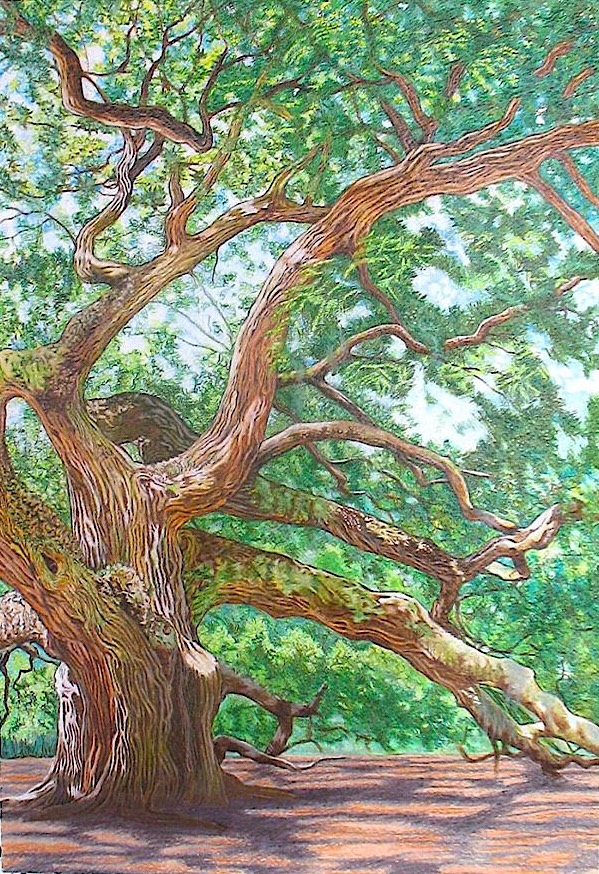
There was a belief that was common to both the tribes of the Celts and of the American Indians. The details are different, but the idea was similar—that a Sacred, colossal tree united the realms of the Earth. The roots were planted in the physical; then, life evolved on its way up the trunk, culminating in the spiritual, which resided in the branches.
The top of the tree was an over-world, where the Sky People dwelt. They were, variously, the star beings seen in the constellations, the godlike progenitors of human kind, or spirit forms who created and then dropped or threw down The People.
Animals seemed to exist already, and could talk and reason and bargain with the Sky People. Sometimes, a mischievous animal would bring a gift—fire or the wheel, or knowledge of agriculture—which would help humans survive and thrive. Because the Sky People were jealous of their exclusive domain, they would become angry with the offending animal, who would be punished by being marked with some physical characteristic—distinctive coloring, for instance—because of this intervention. The Magpie, Coyote, Rabbit, Spider and Raccoon are examples of this.
There was a middle realm in which humans lived, the physical world of day and work. What happened there was caused by, or a reflection of, the events and conditions of the other two worlds.
Last, or rather first, there was a lower region of sleep and dreams and ancestors. This place was seen as the source of life, and the place where all life returned when physical existence was over, to be reabsorbed by Death. The roots of the tree were in the lower region, recognizing that much of the motivation in our everyday lives and thought was unknowable in the light of day, but more powerful and basic than the wakeful mind.
The cultures holding these traditional beliefs lived in or near the great primeval forests, which were thousands of years old when humans first became unified into cultural groups, and the trees would have been seen as not only alive, but as conscious and aware.
In Europe, and the greater part of North America, these mighty forests blanketed thousands of square miles, only broken up by bodies of water, the highest mountains, or regions of steppe. Many of these old trees had massive trunks, or lifted so high into the air that their tops could not be seen from the ground, so it was a completely plausible idea that trees could touch the heavens. There were no tall buildings, and no air travel, and the largest of the great trees would not have been cut down without fear of terrible retribution from the spirit of the land.
The reverent beliefs of those times appear to be long past, and we, as a species, seem to inhale the forests, describing them as “resources;” buying and selling, in cavalier fashion, what took decades, perhaps hundreds, even thousands of years to become part of Nature’s magnificent design.
I’ve given up believing that angry Gods, Goddesses or invisible spirits would avenge Mother Earth for our abuses of the forests, but I do believe that the changes in planetary temperatures, beginning at the dawn of the Industrial Revolution, have reached a point in which climatic backlash is happening in front of our eyes. If we continue much longer to ignore or deny the obvious, the lands retribution for the demise of the great forests will be closer than we think.
© 2025 Laura J Merrill
“Spirits of the Wind”
An uplifting reveal from Quaking aspen.
From The Treetalker
Haven’t posted in quite some time, partly because good news about Nature was becoming hard to find. I’ve published some books about North American trees, which I’ve mentioned before. With this new series of posts, I’m sharing short videos I’ve begun posting on Youtube which share Q&A sessions I’ve done with different trees. Here are the first 3, and I will post more later. If you enjoy them, please give them a 👍🏻 and subscribe ( I post new ones about every 4 days) and please share with anyone you think will like hearing from Nature, up front and personally. 💙
News from The Treetalker

Courtesy WhatWhenHow.com
Why large forest fires may not be a big threat to some endangered animals, January 29, 2019, ScienceDaily. Source: Oxford University Press USA
Spurred by climate change, megafires in western North America are becoming more frequent, causing speculation that endangered species will have an even more difficult surviving.
The Great Gray Owl, endangered in California, is a resident of Yosemite National Park and Stanislaus National Forest, which are areas that were badly burnt in the 2013 Rim Fire, experiencing a 104,000 acre burn.
In surveys covering a 3-year period following the fire, it was found that, rather than decreasing in number, the Grey Owls have adjusted to the terrain well, using large trees that were killed for nesting, and finding plentiful food in the rodent populations that have increased, due to more meadow area. Read the rest of the article here.

Neil Palmer:CIAT
Cattle urine’s planet-warming power can be curtailed with land restoration, January 29, 2019, Science News. Source: International Center for Tropical Agriculture (CIAT)
The exceptional climate-altering capabilities of cattle are mainly due to methane, which they blast into the atmosphere during their daily digestive routine. Cattle urine is a lesser-known climate offender. It produces nitrous oxide (N2O), which has warming power far greater than that of carbon dioxide (CO2), the main driver of global warming. A new study shows that these N2O emissions can be significantly curbed by healthy cattle pastures.
In the majority of test sites, degraded pastures emitted significantly more N2O — sometimes up to three times as much, than restored pasture.
Degraded livestock land is generally characterized by overgrazing, soil compaction, loss of organic material and low levels of nutrients and soil carbon. Large-scale land restoration with improved forage grasses, rotational grazing and the addition of shrubs and trees, could significantly mitigate the negative climate effects wrought by degradation. In addition to reducing N2O emissions, restored landscapes generally contain more carbon, have healthier soils and more robust and productive livestock. Find the rest of this article here.

Odd Andersen:Agence France-Presse — Getty Images
Teenagers Emerge as a Force in Climate Protests Across Europe, By Milan Schreuer, Elian Peltier and Christopher F. Schuetze, for the NYTimes, Jan. 31, 2019
Tens of thousand of children skipped school in Belgium on Thursday to join demonstrations for action against climate change, part of a broader environmental protest movement across Europe that has gathered force over the past several weeks.
In Germany, France, Sweden, Switzerland and elsewhere, activists have come together on social media to gather in large numbers and without much apparent preparation, the protests taking a different shape in each country.
In Germany, students have protested on Fridays, communicating mainly through the messaging app WhatsApp; in Belgium, they organize on Facebook and have skipped school by the thousands on four consecutive Thursdays.
Last Sunday, climate protests in Brussels swelled to an estimated 100,000 people of all ages. That same day, an estimated 80,000 took part in cities across France — more than turned out for the “Yellow Vest” protests the day before.
The climate movement has no obvious leaders or structure, but young people feel that most older people do not feel the urgency that the young do about global warming, and want their governments to take action while there is still time. For the rest of this article, click here.

Johnny Milano for The New York Times
Global Warming Concerns Rise Among Americans in New Poll, by John Schwartz, for the NYTimes, Jan. 22, 2019
Some 73 percent of Americans polled online late last year by the Yale Program on Climate Change Communication, said that global warming was happening, the report found, a jump of 10 percentage points from 2015 and three points since last March. This suggests that climate change has moved out of the realm of the hypothetical for a wide majority of Americans.
Americans’ growing understanding of global warming is part of a long-term trend, which is attributed to the recent increase of extreme weather events with plausible connections to a warming planet, and to the publicity that surrounded two major scientific reports on climate change last year. For more on this, click here.

Wensum Alliance
Norfolk study shows new ditches could help improve rivers, by Maggie Dolan and Nic Rigby for the BBC.
The amount of harmful sludge entering rivers from farmers’ fields can be more than halved with special ditches, a new study by The Rivers Trust found. Its research showed only 14% of UK rivers are currently in a healthy state.
That health can be damaged by sediment containing fertilizer chemicals which can harm water quality and fish.
The study by the University of East Anglia (UEA) and the Wensum Alliance used traps (pictured) near the Blackwater – a tributary which flows into the River Wensum at Lenwade, which in turn flows through Norwich. They then tested the water downriver and found a 58% reduction in sediment year on year.
Traps were also placed near roads, which can also add pollution to waterways. For more on this, click here.

Getty Images/ Kean Collection
And, lastly, I saw this article in this morning’s Washington Post’s daily newsletter, “Today’s WorldView.” Really fascinating.
The salient points to me were, “Scientists from University College London, U.K. estimate that 60 million people were living across the Americas at the end of the 15th Century, and that this was reduced to just five or six million within a hundred years, eliminated by introduced disease (smallpox, measles, etc), warfare, slavery and societal collapse. Vast swaths of agricultural land was then reclaimed by fast-growing trees and other vegetation. This pulled down enough carbon dioxide (CO₂) from the atmosphere to eventually chill the planet.”
Read the article at this link.
See you next time, whenever that might be!
News from The Treetalker
Pollution is changing the fungi that provide mineral nutrients to tree roots, which could explain malnutrition trends in Europe’s trees.
To get nutrients from the soil, trees host fungi, known as mycorrhizal fungi, in their roots. These fungi receive carbon from the tree in exchange for essential nutrients, like nitrogen, phosphorus and potassium, which they gather from the soil.
A huge, 10-year study of 13,000 soil samples across 20 European countries has revealed that many tree fungi communities are stressed by pollution, indicating that current pollution limits set by European countries may not be strict enough, that they may need to lower the amount of nitrogen and phosphorus levels allowed for soil amendments. To read all of this article, click here.

Imperial College, London
Study shows evidence of convergence in bird and primate evolution.
Neuroscientists have identified the neural circuit that may underlay intelligence in birds, according to a new study. “An area of the brain that plays a major role in primate intelligence. . .transfers information between the two largest areas of the brain, which allows for higher-order processing and more sophisticated behavior. In humans and primates, these specific nuclei are large compared to other mammals.”
Birds have a similar structure that has similar connectivity, located in a different part of the brain, which does the same thing – circulates information between the cortex and the cerebellum.
The study determined that the structure in parrots is much larger than that of other birds, with the relevant structure two to five times larger in parrots than in other birds, which has developed independently, involving sophisticated behaviors such as use of tools and self-awareness. Read the rest of the article here.

Andrew Iwaniuk
From the Washington Post Energy and Environment Newsletter. July 6, 2018, Lindsey Bever reporting.
Hawaii just banned your favorite sunscreen to protect its coral reefs
According to the Smithsonian’s National Museum of Natural History, coral reefs are crucial to marine and human life.
In addition to protecting sea creatures, the Smithsonian said, the reefs provide food, medication and tourism jobs, among other things — at a value of $30 billion to $172 billion per year.
Hawaii’s state lawmakers passed legislation in May that would ban skin-care companies from selling and distributing sunscreens on the islands that contain two chemicals deemed damaging to coral reefs. The chemicals, oxybenzone and octinoxate, have significant harmful impacts on Hawaii’s marine environment and residing ecosystems.”
The bill was opposed by various companies and business associations and even some dermatologists, who worry that the ban may discourage people from wearing sunscreen at all. (Blah-blah – no surprise that Big Money doesn’t care about anything other than making more money.)
Read the full article here.

Caleb Jones/AP
From NBC News, Associated Press, June 15, 2018.
Lions and tigers and bears are increasingly becoming night owls because of us, a new study says.
Scientists have long known that human activity disrupts nature. Besides becoming more vigilant and reducing time spent looking for food, many mammals may travel to remote areas or move around less to avoid contact with people. (I know how they feel.)
The latest research found even activities like hiking and camping can scare animals and drive them to become more active at night.
Researchers analyzed 76 studies involving 62 species on six continents, including lions in Tanzania, otters in Brazil, coyotes in California, wild boars in Poland and tigers in Nepal. The study suggests that animals might be “playing it safe around people.”
Read the complete article here.

Shivang Mehta Photography
From NBC News, June 7 2018, Brandon Specktor reporting.
Climate change killed the aliens, and it might kill us too!
Professor Adam Frank, astrophysicist at the U. of Rochester, NY published a new paper in May that “aims to take a 10,000-light-year view of human-caused climate change.”
Using mathematical models based on the disappearance of the lost civilization of Easter Island, Frank and his colleagues simulated how various alien civilizations might rise and fall if they were to increasingly convert their planet’s limited natural resources into energy.
The results, as you might expect, were generally pretty grim. Of four common “trajectories” for energy-intense civilizations, three ended in apocalypse. The fourth scenario — a path that involved converting the whole alien society to sustainable sources of energy — worked only when civilizations recognized the damage they were doing to the planet, and acted in the right away.
“The last scenario is the most frightening,” Frank said. “Even if you did the right thing, if you waited too long, you could still have your population collapse.”
Read the rest of this interesting “what if?” article here.

Illustration by Michael Osadciw/U of Rochester
Also, on my “Spotlight On” page, a bit about our favorite summer plant, Poison Ivy.

Again, don’t forget, Volume 3 of Secret Voices from the Forest is available now on Amazon – you can get there directly via this link.
Have a great week!
 news from (and about) the trees