
Velvet Mesquite gives us some insight into our own issues. Do me a favor and click on the thing at the bottom of the screen that reads “Watch on YouTube.” The more views and likes I get, the more likely sites’ algorithms will bring my video up for others to see. Thanks!
Tag Archives: environment
“Spirits of the Wind”
An uplifting reveal from Quaking aspen.
The Importance of Grass
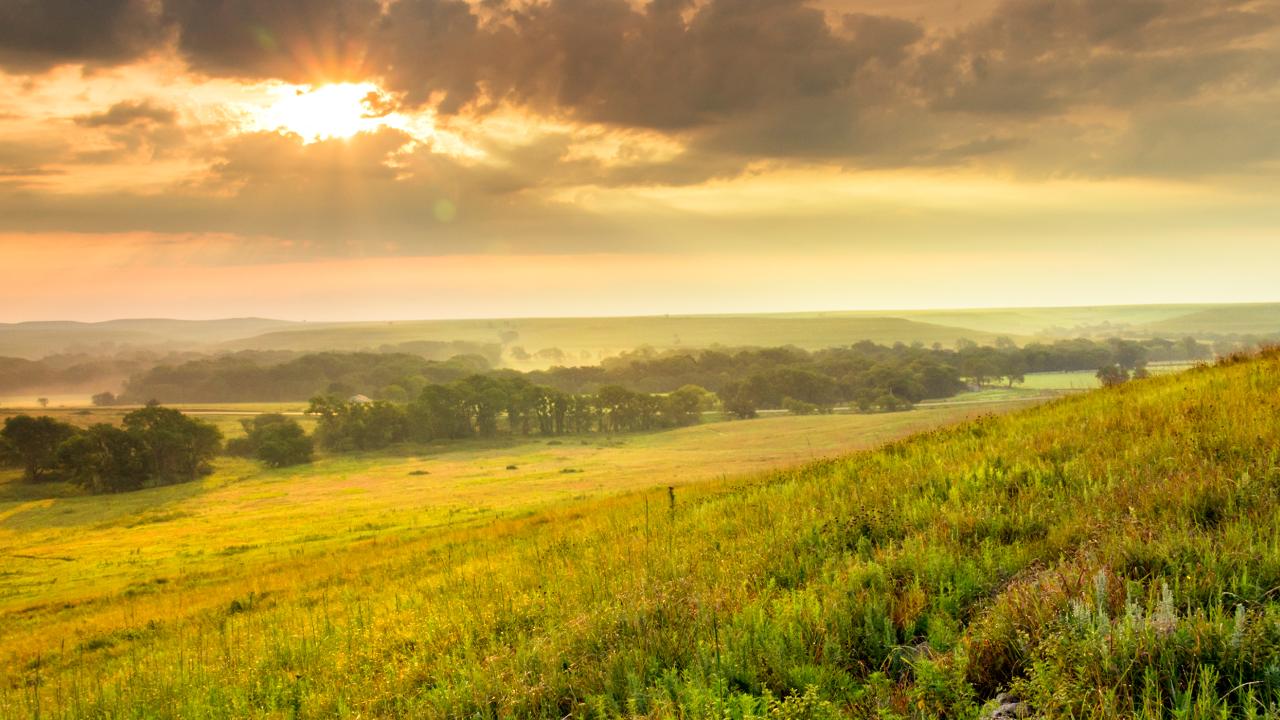
In 1887, the western portion of the Great Plains was described as “an arid and repulsive desert . . . a region of desolation and silence . . . [with] common characteristics of barrenness, inhospitality, and misery,” in A Study in Scarlet, Arthur Conan Doyle’s first Sherlock Holmes adventure. Peoples of the British Isles, and points east had been, for thousands of years, committed to removing as much of “wild” nature as they could. Great cities, housing millions of people, were already common throughout “the Old World,” so to even contemplate migrating to an area where the only inhabitants were tribes of American Indians, who were never excessive in number, and a few rough and hardy trappers, miners and pioneers, was nearly inconceivable.
Having lived in Utah for several years, I can see why the British, and other Europeans, would consider a place so different from their homelands as inhospitable. However, Doyle’s description was not specifically about Utah, and included a large section of the Short-grass Prairie.
“Lush” is in the eye of the beholder. Sub-surface life on the plains is more extensive than what is above ground; indeed it has been referred to as “the poor person’s tropical rainforest,” because of the abundant and varied forms of life contained per cubic yard.
The majority of us may not be particularly into the world of creepy-crawlies, and probably figure, “Oh, what’s the difference if I kill all these little things every time I take a step because there’s so many of them, and I can’t see them anyway.” Nevertheless, it’s worth remembering that in the greater scheme of things, humans are comparatively small, and can be wiped out just as easily.
How do we know there isn’t a being so immense, compared to us, that we’re unable to take in its entire form all at once, and who, should it take a “step,” would wipe out millions of us at a crack? And while that idea takes us to a “what if?” place more appropriate to science fiction, certain viruses have the capacity to do the job very well, as we have recently come to realize.
While we tend to loathe and fear these microscopic creatures, they, much more than we, hold the planet together—literally. They are what allow plants and animals to absorb nutrients. Without them, “higher” life forms, which have evolved to make use of their abilities, would not survive, and that includes us. Without all those microbes, bacteria, yeasts, and others, Earth would still be a big rock with a molten core, slowly cooling.
But the subject was grass. And the evolution of grasses, it appears to me, accounts for the great explosion of current life forms. Countless animals, of all sizes, eat them, and are eaten in turn, returning in death to the soil and, as a matter of fact, eventually as soil. So the little, humble things such as algae, bacteria, viruses, fungi, ants, bees, birds, and yes, grass, are important—actually, vital. Without any of them, life would all just fade away.
© Laura J Merrill 2014
Calm Down Pt. 2 😌
Just a little clarification from Bristlecone pine: Please watch ON YouTube. That way my site there gets credit for views. And please, like and share with any nature-lovers you know. I’m only kind of weird.
Calm down! There’s a Bigger Plan!
Bristlecone pine hangs around planet Earth for thousands of years, while our lives are short. It counsels us to take a wider view on the events of the day, and not stress out so much over things that may only last as long as the blink of an eye. If you can, please watch on YouTube, like, subscribe and share!
American Elm gives us insight about Loneliness
People are feeling it. Parents worry about their kids and their smart phones. Elm gives us an amazing view on the future and some remarkable changes ahead.
(Please watch on YouTube ⬇️ 👍🏻 subscribe and share!) Help me grow my channel. 💙
“Have Mercy”
Sweetleaf tree shares some thoughts about acting with mercy. Kinda timely… (P.S. when you watch this video, click on the “Watch on Youtube” at the bottom left. It helps promote that site when I get views. Also, please 👍🏻 and share with anyone who loves tree and nature and doesn’t think that talking to trees is a totally nutso thing. And subscribe, if you find it interesting and a bit different.
From The Treetalker
Haven’t posted in quite some time, partly because good news about Nature was becoming hard to find. I’ve published some books about North American trees, which I’ve mentioned before. With this new series of posts, I’m sharing short videos I’ve begun posting on Youtube which share Q&A sessions I’ve done with different trees. Here are the first 3, and I will post more later. If you enjoy them, please give them a 👍🏻 and subscribe ( I post new ones about every 4 days) and please share with anyone you think will like hearing from Nature, up front and personally. 💙
News from The Treetalker
Today, for your holiday reading, four articles about salamanders, all from the New York Times. I found they have a number of articles about these sometimes exotic creatures, going back a few years, although these were all published in 2018.
“A Salamander of Legend Emerges From Southern Swamps,”
by Asher Elbein, Dec. 14, 2018
“It’s eel-shaped and leopard-spotted, and it has no hind-limbs. It grows to two feet long. And yet until recently, hardly anyone had ever seen it.
A team of researchers has discovered of new species of salamander in the pine forests of northern Florida and southern Alabama. The so-called reticulated siren is the largest vertebrate found in the United States in decades, and the first new member of its family since 1944.”
This is a link to the entire, fascinating article.

Photo: David Steen
“Vanishing in the Wild, These Salamanders Found Refuge in a Convent,”
by Geoffrey Giller, July 30, 2018
“The Basílica de Nuestra Señora de la Salud, built in the 1500s with whitewashed walls and red stone columns, hosts a thriving colony of endangered salamanders. Scientists call them Ambystoma dumerilii, but the nuns in Pátzcuaro, Mexico call them achoques.
The achoques live their entire lives underwater and keep the external gills that most salamanders have only as aquatic larvae.
Carefully tended by the nuns, about 300 achoques live in glass aquaria and white enamel bathtubs lining the walls of a long hallway and two adjoining rooms in the convent. The nuns support themselves partly by selling a cough syrup called jarabe made from the salamanders’ skin.
They are found nowhere but Lake Pátzcuaro, and outside the convent their numbers are falling fast. This colony may be critical to the salamanders’ prospects in the wild.”
A link to the article is here.


“China’s Giant Salamanders Pose a Conservation Conundrum,”
by Rachel Nuwer, June 4, 2018
“The Chinese giant salamander, the world’s largest amphibian and a critically endangered species, has quietly slipped toward extinction in nature. Following an exhaustive, years long search, researchers recently reported that they were unable to find any wild-born individuals.
Millions of giant salamanders live on farms scattered throughout China, where the animals are bred for their meat. But another study by Dr. Turvey and his colleagues shows that reintroducing farmed animals is not a simple solution for saving the species in the wild.
In the wild, Chinese giant salamanders were not just one species but at least five, and perhaps as many as eight. On farms, they are being muddled into a single hybridized population adapted to no particular environment.
“The farms are driving the extinction of most of the species by homogenizing them,” said Robert Murphy, a co-author and senior curator of herpetology at the Royal Ontario Museum. “We’re losing genetic diversity and adaptations that have been evolving for millions of years.”
Many have been released into the wild, in the hope of maintaining the species, but the genetic mixup has created an issue of “pure” wild species.
Here is a link to the article. www.nytimes.com/2018/06/04/science/giant-salamanders-china.html?action=click&module=RelatedLinks&pgtype=Article

photo credits: Goh Chai Hin/Agence France-Presse — Getty Images

“The Smiling Axolotl Hides a Secret: A Giant Genome,”
by Nicholas Bakalar, Feb. 1, 2018
“Scientists have decoded the genome of the axolotl, the Mexican amphibian with a Mona Lisa smile. It has 32 billion base pairs, which makes it ten times the size of the human genome, and the largest genome ever sequenced.
The axolotl, endangered in the wild, has been bred in laboratories and studied for more than 150 years. It has the remarkable capacity to regrow amputated limbs complete with bones, muscles and nerves; to heal wounds without producing scar tissue; and even to regenerate damaged internal organs.
This salamander can heal a crushed spinal cord and have it function just like it did before it was damaged. This ability, which exists to such an extent in no other animal, makes its genes of considerable interest.
This is the first salamander genome ever sequenced. The reason it took so long is that it has so many repetitive parts. The study’s author believes that it will open up a wealth of opportunities in studying how organisms regenerate.”
Here is the link. www.nytimes.com/2018/02/01/science/axolotl-genes-limbs.html?action=click&module=RelatedLinkspgtype=Article

photo credit: Research Institute of Molecular Pathology
Spotlight on:
Harbor seal
Although Harbor seals have the greatest geographical range of all seals, encompassing both Pacific and Atlantic Oceans in the Northern Hemisphere, they stay in the coastal areas, rarely going out into the ocean further than ten miles.
They hunt alone, but are sociable when they “haul out” to rest or breed on places that are protected, which can be a beach, a rocky shore, or an iceberg.
Before a seal pup is born, it is covered with a white wooly coat. At birth, it weighs about twenty-five pounds and can swim and dive within four hours. The mother’s milk is 40% fat, so the pup doubles its weight the first month, after which time it is left to learn to hunt and fend for itself.
Seals are distantly related to dogs and bears. They have upper and lower arms and legs that are concealed, and only their hands and feet extend outside the casing of the skin. The hands and feet are known as “flippers,” and are flat and elongated, each having five digits.
They typically dive for about three minutes at a time, but can stay underwater for a half an hour and dive as deep as 600 feet. To do this, they breathe out before diving, using oxygen already in their bodies and slowing their heartbeat from about one hundred beats per minute to ten. In one breath a seal exchanges 90% of the air in its lungs, while we can only change 20%.
Both the United Kingdom and the United States prohibit the killing of seals, although there can be a high mortality rate for pups in some countries, as they can get caught in bottom trawl nets. From Volume 3 of Secret Voices: Crabapple Companions

Secret Voices from the Forest – Volume Three: The East is available on Amazon.


