
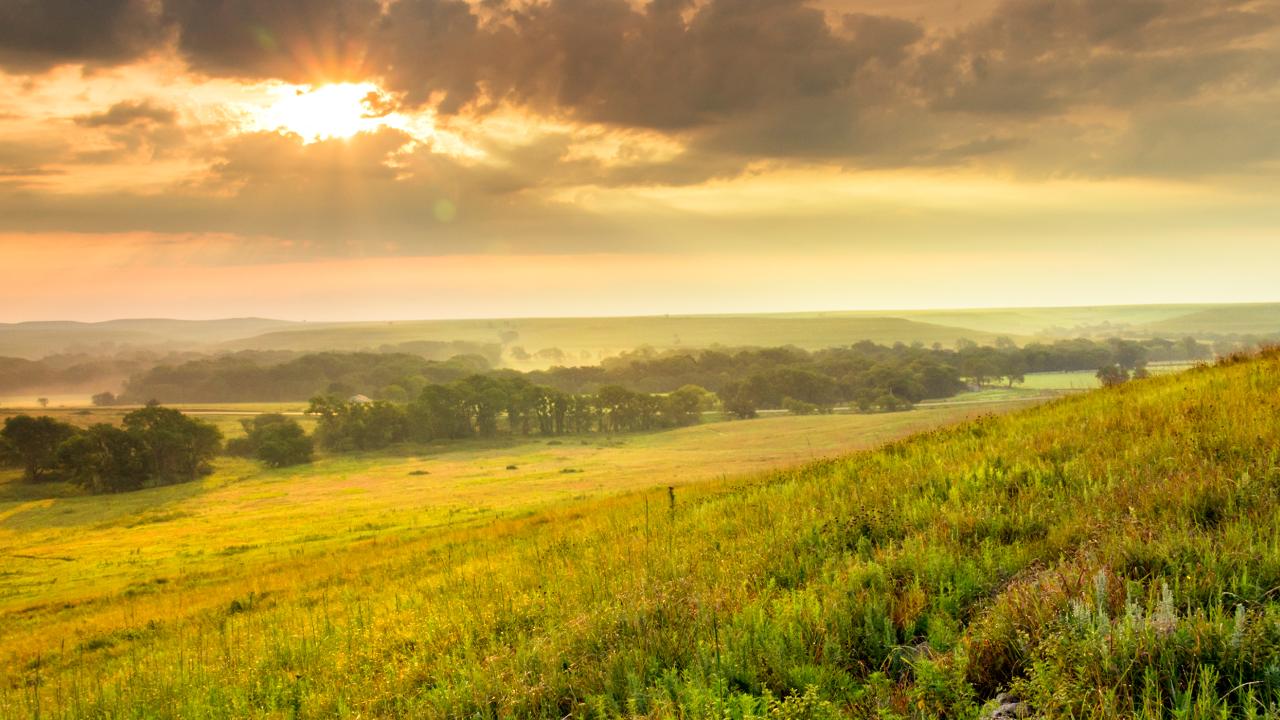
In 1887, the western portion of the Great Plains was described as “an arid and repulsive desert . . . a region of desolation and silence . . . [with] common characteristics of barrenness, inhospitality, and misery,” in A Study in Scarlet, Arthur Conan Doyle’s first Sherlock Holmes adventure. Peoples of the British Isles, and points east had been, for thousands of years, committed to removing as much of “wild” nature as they could. Great cities, housing millions of people, were already common throughout “the Old World,” so to even contemplate migrating to an area where the only inhabitants were tribes of American Indians, who were never excessive in number, and a few rough and hardy trappers, miners and pioneers, was nearly inconceivable.
Having lived in Utah for several years, I can see why the British, and other Europeans, would consider a place so different from their homelands as inhospitable. However, Doyle’s description was not specifically about Utah, and included a large section of the Short-grass Prairie.
“Lush” is in the eye of the beholder. Sub-surface life on the plains is more extensive than what is above ground; indeed it has been referred to as “the poor person’s tropical rainforest,” because of the abundant and varied forms of life contained per cubic yard.
The majority of us may not be particularly into the world of creepy-crawlies, and probably figure, “Oh, what’s the difference if I kill all these little things every time I take a step because there’s so many of them, and I can’t see them anyway.” Nevertheless, it’s worth remembering that in the greater scheme of things, humans are comparatively small, and can be wiped out just as easily.
How do we know there isn’t a being so immense, compared to us, that we’re unable to take in its entire form all at once, and who, should it take a “step,” would wipe out millions of us at a crack? And while that idea takes us to a “what if?” place more appropriate to science fiction, certain viruses have the capacity to do the job very well, as we have recently come to realize.
While we tend to loathe and fear these microscopic creatures, they, much more than we, hold the planet together—literally. They are what allow plants and animals to absorb nutrients. Without them, “higher” life forms, which have evolved to make use of their abilities, would not survive, and that includes us. Without all those microbes, bacteria, yeasts, and others, Earth would still be a big rock with a molten core, slowly cooling.
But the subject was grass. And the evolution of grasses, it appears to me, accounts for the great explosion of current life forms. Countless animals, of all sizes, eat them, and are eaten in turn, returning in death to the soil and, as a matter of fact, eventually as soil. So the little, humble things such as algae, bacteria, viruses, fungi, ants, bees, birds, and yes, grass, are important—actually, vital. Without any of them, life would all just fade away.
© Laura J Merrill 2014


How fascinating.
LikeLiked by 1 person
Thanks for reading and watching my most recent posts. I know they’re a departure from what I used to do, with news stories and what all. I just felt I wanted to contribute something positive, as stories about nature and trees get more dismal all the time. 💚
LikeLike